Key Points:
- BitGo CEO Mike Belshe said the failure of the US Clarity Act to advance has left digital asset markets exposed to structural risks.
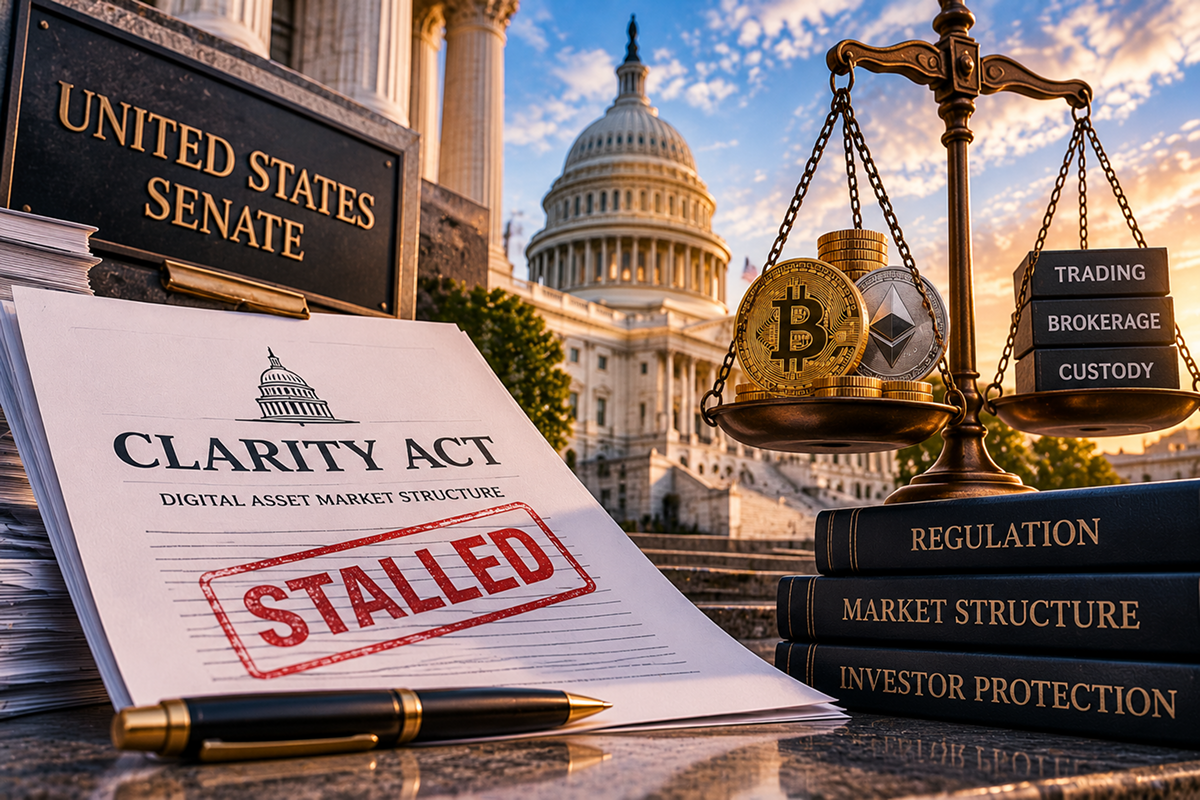
- The legislation failed to secure the 60 votes required to proceed in the Senate on September 15, delaying efforts to establish clearer crypto market rules.
- Industry executives argue that stronger regulatory frameworks are needed as crypto firms increasingly combine trading, brokerage, and custody services.
The US cryptocurrency regulatory debate has intensified after the Senate failed to advance the Clarity Act, with BitGo CEO Mike Belshe warning that the absence of clearer market rules could increase risks across digital asset markets. The development highlights a continuing challenge for crypto companies seeking greater institutional participation while operating under an evolving regulatory framework.
The setback comes as the digital asset industry moves deeper into traditional finance, with firms expanding services across trading, custody, brokerage, and settlement. For institutional investors, regulatory clarity remains a key factor influencing market structure, operational standards, and long-term adoption.
Senate Setback Delays Crypto Market Structure Framework
The Clarity Act failed to move forward after the US Senate rejected a procedural motion on September 15, falling short of the 60 votes required to advance the legislation. The bill was designed to provide additional guidance around cryptocurrency market structure and define regulatory responsibilities within the digital asset sector.
BitGo, a major cryptocurrency custody and infrastructure company, supported the legislation, with CEO Mike Belshe stating that the lack of progress creates uncertainty for market participants. According to Belshe, companies are increasingly building integrated platforms that combine multiple financial services without a fully established regulatory framework designed to address potential conflicts and risks.
The debate reflects a broader challenge facing the industry: balancing innovation with investor protection. As cryptocurrency markets have expanded beyond early trading activity into institutional services, questions surrounding oversight, custody standards, and operational separation have become more significant.
Integrated Crypto Platforms Raise Market Structure Questions
One of Belshe’s central concerns is the emergence of one-stop crypto platforms that provide trading, brokerage, and custody services under a single structure. Traditional financial markets often separate these functions through regulatory requirements intended to reduce conflicts of interest and improve transparency.
The crypto industry has grown substantially in recent years, with the total digital asset market capitalization reaching approximately $2 trillion during stronger market cycles. As institutional capital enters the sector, market participants increasingly focus on infrastructure quality, risk controls, and compliance standards.
For professional investors, the absence of consistent rules can create additional challenges when evaluating counterparties and service providers. Regulatory uncertainty may affect how institutions approach digital asset exposure, partnerships, and operational planning.
Institutional Adoption Depends on Regulatory Clarity
The stalled legislation arrives during a period of increased institutional involvement in cryptocurrency markets. Major financial firms have expanded digital asset offerings, while demand has grown for regulated custody solutions, tokenized assets, and blockchain-based settlement systems.
Industry executives have argued that clearer regulations could improve market confidence by establishing more predictable standards. However, policymakers continue debating how digital assets should fit within existing financial regulations and which agencies should oversee different market segments.
The discussion also reflects differing perspectives among market participants. Supporters of expanded regulation argue that clearer rules could encourage institutional participation, while critics remain focused on ensuring that new frameworks do not create unnecessary risks for consumers or financial stability.
What Investors Will Watch Next
The future direction of US crypto regulation remains a major factor for digital asset markets. The stalled Clarity Act debate highlights the ongoing gap between rapid industry development and the pace of legislative action.
Investors will continue monitoring congressional developments, regulatory guidance, and how crypto companies adapt their business models amid uncertainty. The evolution of market structure rules could influence the next phase of institutional participation, custody standards, and the integration of digital assets into the broader financial system.
Comparison, examination, and analysis between investment houses
Leave your details, and an expert from our team will get back to you as soon as possible