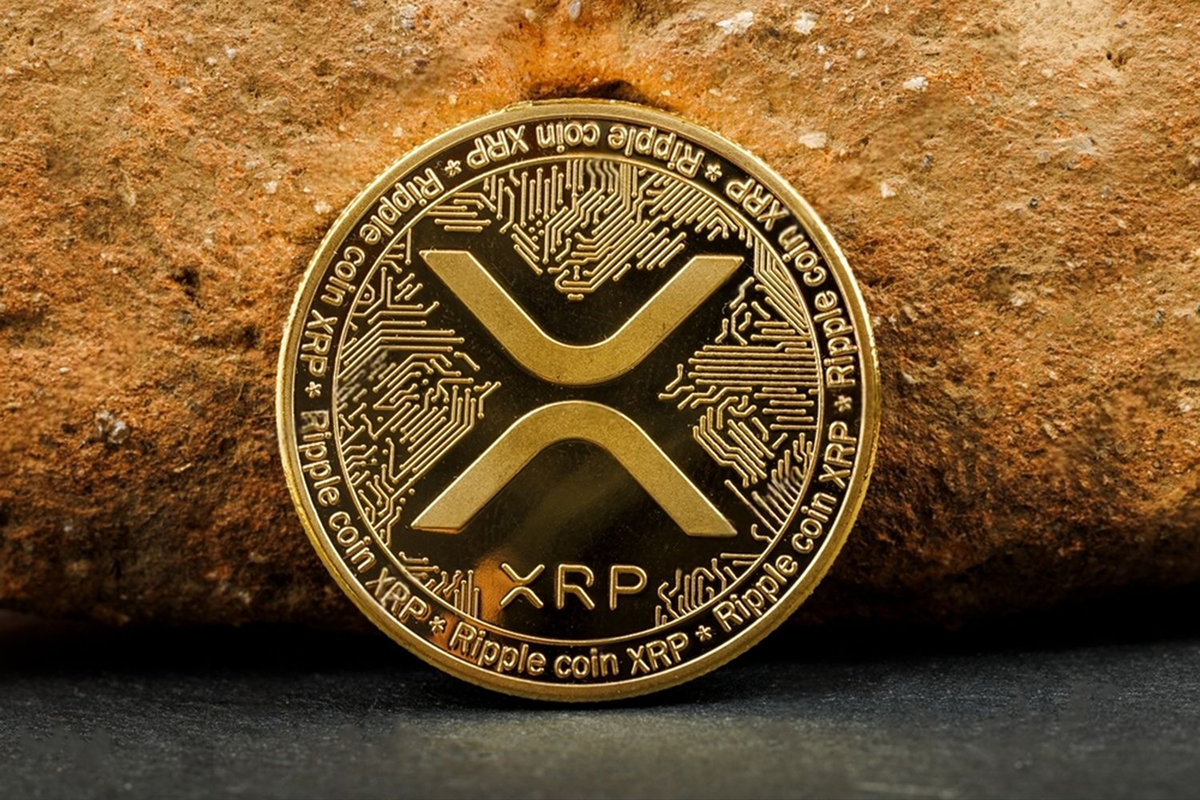
XRP was designed to facilitate cross-border payments and foreign exchange settlement, placing it at the center of discussions about the future of global financial infrastructure. While some analysts have explored scenarios in which XRP could become the dominant settlement asset for international payments, such projections remain highly theoretical and depend on widespread institutional adoption that has yet to materialize.
The analysis comes as financial institutions continue exploring blockchain technology for payments, tokenization, and settlement. For professional investors, the discussion is less about predicting a specific price target and more about understanding how network adoption, transaction velocity, and real-world utility influence the valuation of digital assets.
XRP Targets a Massive Global Payments Opportunity
According to industry estimates, more than $150 trillion moves across borders annually, while the global foreign exchange market processes approximately $9.6 trillion in transactions every day. These markets represent the opportunity XRP was originally designed to address through faster and more efficient settlement.
Ripple currently processes approximately $16 trillion in annual payment and clearing flows across its financial network. However, Ripple CEO Brad Garlinghouse has acknowledged that digital assets, including XRP, currently account for “close to zero percent” of that overall payment volume, illustrating that blockchain-based settlement remains in the early stages of institutional adoption.
The contrast between Ripple’s payment network activity and XRP’s current utilization demonstrates the gap between existing infrastructure and the broader vision for blockchain-enabled cross-border finance.
Utility, Transaction Velocity, and XRP Valuation
Theoretical valuation models suggest that XRP derives value from two primary sources. The first is the amount of XRP financial institutions would need to hold to facilitate settlements, while the second is investor demand from individuals and organizations choosing to own the asset.
Today, nearly all of XRP’s approximately $69 billion market capitalization is driven by investor ownership rather than transactional demand. Analysts argue that if XRP eventually became a primary settlement asset for the global foreign exchange market, its valuation would depend heavily on transaction velocity—how quickly each token is reused for successive payments.
Under hypothetical scenarios where XRP processed the entire $9.6 trillion daily foreign exchange market, valuation models estimate a price range between approximately $15 and $155 per token. These figures assume complete market adoption and varying rates of token circulation, making them illustrative rather than predictive.
Institutional Adoption Remains the Critical Variable
For institutional investors, the key issue is not whether theoretical valuation models are mathematically possible, but whether the underlying adoption assumptions can realistically be achieved. Replacing a significant portion of the global payments infrastructure would require widespread participation from banks, payment providers, central banks, regulators, and financial market participants.
The competitive landscape is also evolving rapidly. Stablecoins, central bank digital currencies (CBDCs), tokenized deposits, and alternative blockchain networks are all competing to modernize international payments. As a result, XRP’s long-term value proposition depends not only on technological capability but also on regulatory acceptance, interoperability, liquidity, and institutional confidence.
Investor sentiment surrounding XRP continues to be influenced by both its payment-focused narrative and broader cryptocurrency market conditions. While theoretical valuation models generate discussion, professional investors typically place greater emphasis on measurable adoption metrics, transaction growth, and commercial partnerships than on speculative price projections.
Looking ahead, XRP’s long-term outlook will likely be determined by the pace of institutional adoption, regulatory clarity, and the continued evolution of blockchain-based payment infrastructure. While scenarios envisioning XRP as the dominant global settlement asset illustrate its theoretical potential, the market will ultimately focus on whether real-world usage expands sufficiently to support higher long-term valuations.
Comparison, examination, and analysis between investment houses
Leave your details, and an expert from our team will get back to you as soon as possible