Key Points:
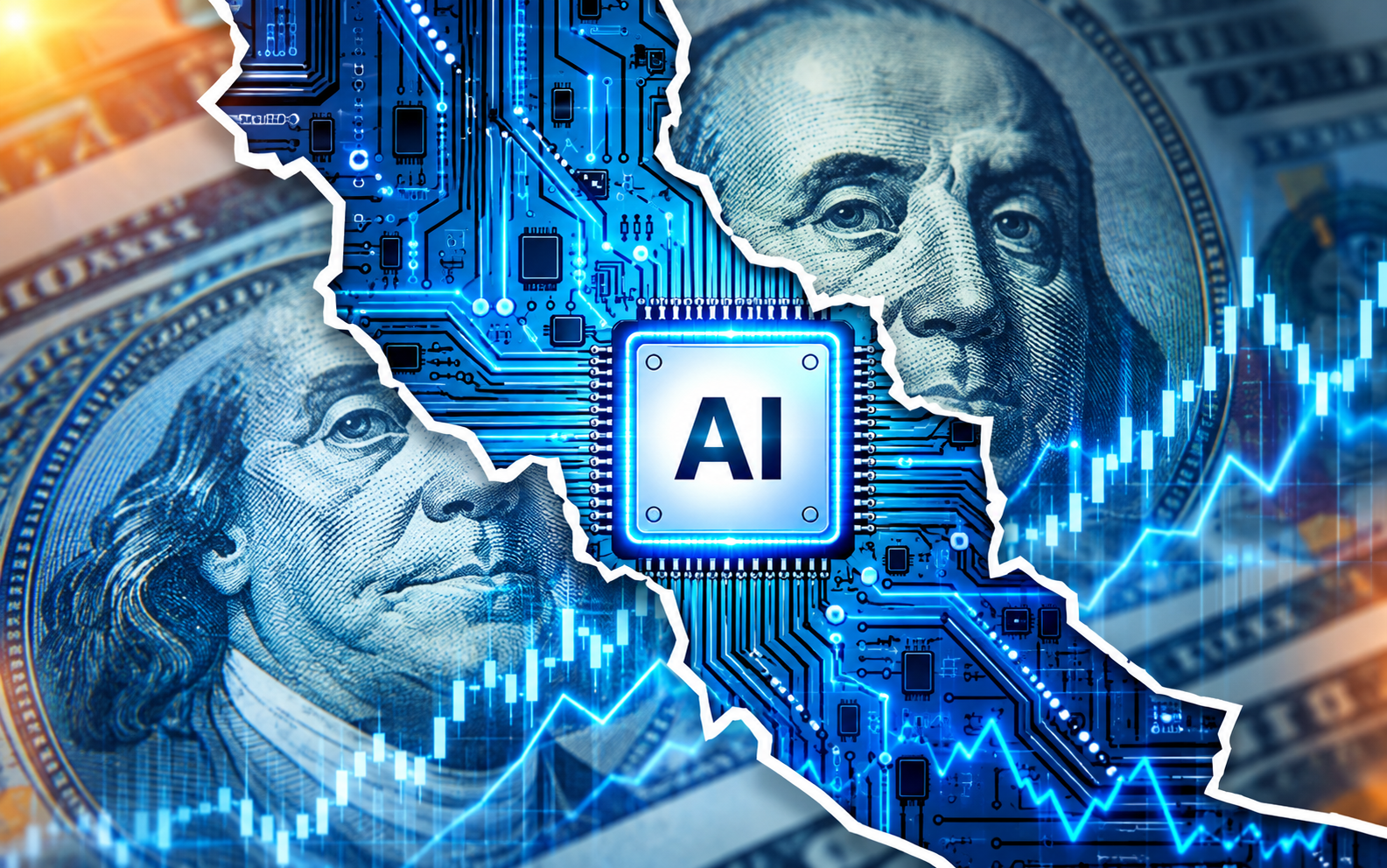
- US AI investment has reached a scale that makes the sector increasingly important to economic growth, with Goldman Sachs expecting the five major US AI hyperscalers to spend about $800 billion on AI infrastructure in 2026.
- A St. Louis Fed analysis estimated that broad AI-related investment contributed 39% of US real GDP growth during the first nine months of 2025.
- An AI development slowdown would not automatically cause a recession, but a sharp reversal in AI investment could pressure equities, credit and economic growth, with the IMF and Fitch outlining scenarios involving substantial market declines and weaker US output.
The rapid expansion of artificial intelligence investment has created a new economic question for the United States: what happens if the pace of AI development slows while hundreds of billions of dollars are already committed to infrastructure, computing capacity and model development?
The issue has become more prominent as technology executives, policymakers and researchers debate how quickly the most capable AI systems should advance. Anthropic CEO Dario Amodei has called for “pacing the frontier” so that safety research can keep up with model capabilities, while other technology leaders have supported elements of that approach without endorsing a coordinated halt.
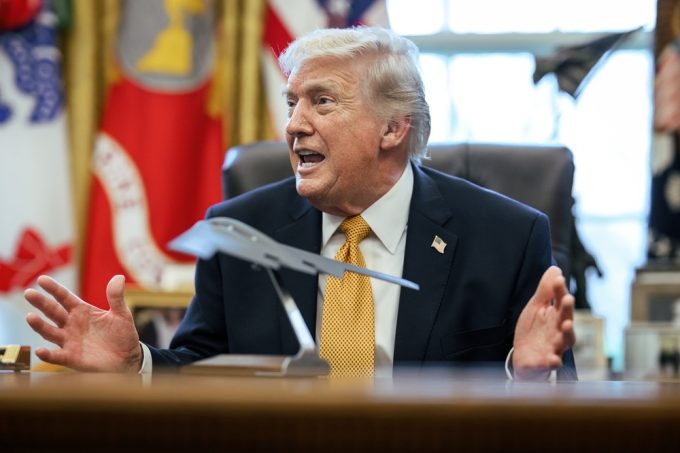
At the same time, the US government has emphasized maintaining technological leadership over China. President Donald Trump has opposed a broad slowdown and has created a new Super Intelligence Force led by Director of National Intelligence Jay Clayton.
The competing positions have emerged as AI investment becomes increasingly important to the US economy and financial markets.
AI Investment Reaches Economy-Wide Scale
The financial commitment to AI infrastructure has expanded rapidly. Goldman Sachs estimates that the five major US-based AI hyperscalers could invest approximately $800 billion in AI infrastructure during 2026.
Corporate financing is also supporting the expansion. SoftBank recently launched more than $10 billion and €1 billion in bond offerings to help finance its investment in OpenAI. The company had already invested approximately $54.6 billion in OpenAI by the end of July, according to the source material.
The scale of these commitments means that a significant change in expectations surrounding AI could affect more than technology companies. It could influence infrastructure spending, semiconductor demand, data-center construction, electricity consumption, corporate financing and equity valuations.
A January analysis from the Federal Reserve Bank of St. Louis estimated that broad AI-related investment accounted for 39% of real GDP growth during the first nine months of 2025. Excluding data centers, the contribution was estimated at 36%.
That figure does not mean AI alone generated 39% of overall economic growth, but it illustrates how heavily AI-related capital expenditure has become embedded in recent US growth.
What Would an AI Slowdown Actually Mean?
A slowdown in frontier-model development would not necessarily mean that AI investment stops. The distinction between slowing the development of increasingly capable models and stopping the deployment of existing technology is important.
Anthropic’s proposal, for example, calls for pacing frontier development while allowing model training and technical progress to continue under stronger safety measures. Other industry participants argue that businesses could continue adopting existing models even if the pace of new model development were reduced.
David Minarsch, CEO of AI phone-agent company Valory and a founding member of the Olas AI-agent ecosystem, argued that significant productivity gains could continue through broader adoption of existing systems. He said AI adoption remains limited across many industries and that wider dissemination of current models could continue generating economic gains even if new model training were halted.
Shiv Shankar, founder and CEO of AI computing platform Boundless, similarly expects inference demand to continue increasing as businesses identify additional applications for existing AI systems.
This creates a potential distinction between an AI innovation slowdown and an AI investment collapse. The first could coexist with continued adoption, while the second would represent a much larger economic shock.
Financial Markets Could Absorb the First Impact
The more significant risk could emerge if investors begin to question the returns expected from AI infrastructure spending.
The IMF estimated in April that a reversal in AI investment could produce a 20% decline in US equity markets, tighter credit conditions, US GDP 1.5% below baseline and global output 1.2% lower.
A September scenario from Fitch was more severe, projecting that a 35% equity-market shock combined with a retrenchment in capital expenditure could result in a US recession.
These scenarios illustrate why an AI slowdown could matter even if AI technology itself continues to improve. A reduction in expected returns could cause companies to cancel or delay data-center projects, investors to revalue AI-linked companies and lenders to become more cautious about financing additional infrastructure.
The resulting effects could then spread beyond the technology sector.
The Risk of Overinvestment
Economic concerns are not limited to the possibility that AI development becomes slower. Another issue is whether the current investment boom has already moved beyond economically sustainable levels.
The Bank for International Settlements estimated in a July paper that AI infrastructure investment could be roughly 50% above the socially efficient level under its baseline scenario. The analysis warned that larger investment booms can result in more disruptive corrections.
BIS administrator Pablo Hernández de Cos has also compared the current AI investment cycle with historical periods in which major technological breakthroughs attracted more capital than eventual returns could justify. He cited episodes including the canal, railway, electrification and dotcom investment booms.
The comparison does not imply that AI is equivalent to those earlier technologies. Rather, it highlights the financial risk created when investment expectations become disconnected from eventual economic returns.
A Slowdown Could Also Reduce Excess
There is another interpretation of the same risk.
UBS has argued that pacing AI development does not necessarily mean lower capital expenditure and maintained its 2027 AI industry capital expenditure forecast of $1.2 trillion, compared with an estimated $900 billion for 2026.
If demand for AI infrastructure continues rising even while frontier model development becomes more controlled, investment could remain strong. In that scenario, a more measured development path could potentially reduce some forms of excess investment without eliminating the broader economic expansion associated with AI adoption.
The key variable is therefore not simply whether AI development slows, but how markets, companies and lenders respond to that slowdown.
Outlook
An AI slowdown would not automatically translate into a US recession. Existing models could continue spreading through businesses, inference demand could rise and companies could maintain significant infrastructure spending even if frontier development becomes more tightly controlled.
The greater economic risk would arise from a sharp reassessment of AI’s expected returns. With AI-related investment already contributing materially to US growth and hundreds of billions of dollars committed to infrastructure, a sudden reduction in spending could affect equity valuations, corporate investment, credit markets and broader economic activity.
For investors, the distinction between slower AI progress and an AI investment bust may therefore become increasingly important. A controlled pace of development could still support adoption and productivity, while a collapse in expected returns could expose the financial system to the consequences of an investment cycle that has grown increasingly important to the US economy.
Comparison, examination, and analysis between investment houses
Leave your details, and an expert from our team will get back to you as soon as possible