Key Takeaways
- Senate Democrats are preparing a counterproposal to the Republican-backed CLARITY Act despite the GOP describing its latest 635-page version as a final offer.
- The revised bill contains 126 substantive changes sought by Democrats, including stronger ethics provisions and additional oversight of digital-asset activities.
- The outcome of the Senate’s 60-vote procedural hurdle could materially influence the regulatory outlook for crypto exchanges, issuers, DeFi platforms and institutional investors.
Senate Democrats are pushing back against Republicans’ latest CLARITY Act proposal, sending negotiations into another round just hours before a critical procedural vote. The dispute comes as Bitcoin trades around $78,000 and crypto markets remain highly sensitive to U.S. regulatory developments, making the legislation one of the industry’s most important near-term policy catalysts.
Last-Minute Negotiations Test Crypto Legislation
Republicans released a revised 635-page version of the Digital Asset Market CLARITY Act after incorporating 126 substantive changes requested by Democratic negotiators. The proposal includes stronger restrictions concerning public officials’ digital-asset interests, while President Donald Trump has accepted most of the proposed ethics framework.
Despite those concessions, some Democrats remain dissatisfied with the latest language and are preparing a counterproposal. The timing is significant because the Senate procedural vote requires 60 votes to advance the legislation, meaning Republicans need support from at least seven Democrats if all 53 Republicans vote in favor.
Why the CLARITY Act Matters for Crypto Markets
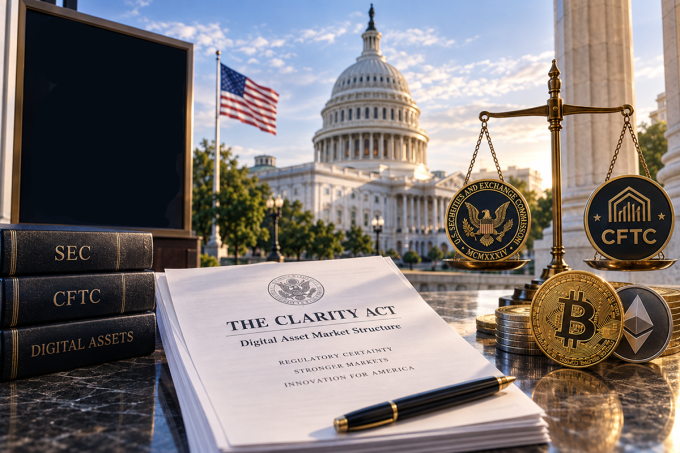
The legislation is designed to establish clearer boundaries between the Securities and Exchange Commission and Commodity Futures Trading Commission while defining regulatory treatment for different categories of digital assets and market participants.
For institutional investors, the distinction is significant. Greater clarity over whether an asset or platform falls primarily under securities or commodities regulation could reduce legal uncertainty surrounding exchanges, custody providers, token issuers and financial institutions. The bill also addresses stablecoins, including provisions that could allow the Treasury Department to respond if payment stablecoins create substantial deposit outflows from community banks.
Bitcoin’s position near $78,000 illustrates the market’s broader sensitivity to macro and policy catalysts. A prolonged legislative delay could reinforce uncertainty across U.S.-focused digital-asset businesses, while meaningful progress could improve expectations for institutional participation.
Ethics and DeFi Remain Central Political Fault Lines
The remaining disagreement extends beyond technical market structure rules. Democratic negotiators continue to focus on ethics provisions involving federal officials and their spouses, while Republicans have argued that their latest text incorporates the substantial majority of Democratic requests.
The revised legislation also contains changes affecting decentralized finance and developer protections. Those provisions could have long-term implications because regulatory treatment of software developers, protocol operators and decentralized networks remains one of the industry’s most difficult legal questions.
Strategic Outlook
The immediate test is whether Democrats accept further negotiations or allow the Senate to proceed with the procedural vote. Even if the bill clears the 60-vote threshold, additional legislative steps would remain before enactment. For crypto investors and institutions, the central issue is therefore not simply whether CLARITY passes, but whether the final framework provides durable rules for digital-asset markets without creating new uncertainty around stablecoins, DeFi and political conflicts of interest.
Comparison, examination, and analysis between investment houses
Leave your details, and an expert from our team will get back to you as soon as possible