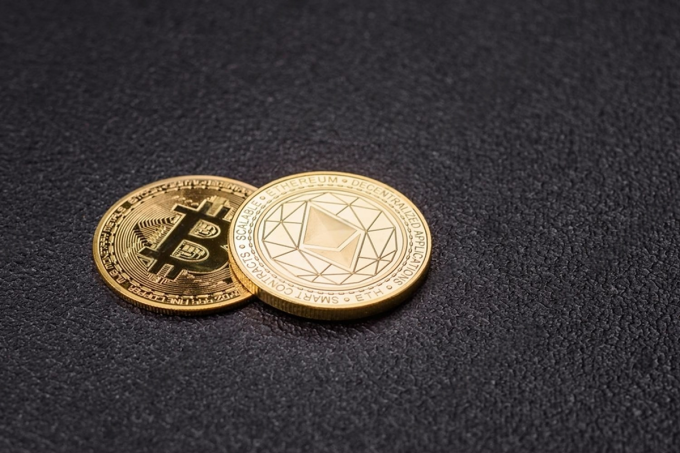
Ethereum (ETH) is increasingly attracting attention as institutional investors and market analysts evaluate the next phase of blockchain adoption beyond the digital store-of-value narrative traditionally associated with Bitcoin (BTC). While Bitcoin remains the largest cryptocurrency by market capitalization, Ethereum’s expanding role in decentralized finance, tokenization, and smart contract infrastructure has strengthened the argument that its long-term growth drivers extend beyond price appreciation alone.
The debate emerges as digital asset markets continue to navigate evolving regulation, macroeconomic uncertainty, and growing participation from banks, asset managers, and technology companies. Rather than representing a competition between two cryptocurrencies, the discussion reflects how investors are assessing different blockchain ecosystems based on utility, adoption, and future economic relevance.
Ethereum’s Expanding Ecosystem Supports a Broader Investment Thesis
Unlike Bitcoin, whose primary investment narrative centers on scarcity and its role as a digital reserve asset, Ethereum functions as a programmable blockchain supporting decentralized applications, tokenized assets, stablecoins, and decentralized finance (DeFi). Thousands of applications operate on the Ethereum network, generating continuous on-chain activity that extends its value proposition beyond simple ownership.
The blockchain also serves as infrastructure for numerous financial innovations, including tokenized securities, digital identity solutions, and enterprise blockchain initiatives. As institutions increasingly explore blockchain technology for real-world financial applications, Ethereum’s ecosystem continues to benefit from expanding developer activity and enterprise integration.
For sophisticated investors, this diversified utility creates multiple potential sources of long-term demand that are not solely dependent on market sentiment surrounding cryptocurrency prices.
Institutional Adoption and Tokenization Trends Favor Blockchain Infrastructure
The global financial industry has accelerated efforts to explore tokenization, with banks, asset managers, and payment companies testing blockchain-based settlement systems and digital representations of traditional financial assets. Ethereum remains one of the leading platforms supporting these initiatives due to its established smart contract capabilities and extensive developer ecosystem.
Following its transition to a Proof-of-Stake consensus mechanism, Ethereum significantly reduced its energy consumption while introducing staking mechanisms that further differentiate it from Bitcoin’s Proof-of-Work architecture. These technological developments have increased institutional interest among organizations seeking blockchain exposure while considering environmental and governance factors.
However, Ethereum also faces competitive challenges from alternative blockchain networks, evolving regulatory requirements, and scalability considerations that may influence adoption rates over time.
Investor Sentiment Reflects a Shift Toward Utility-Based Valuation
Behavioral finance suggests that investor focus has gradually shifted from viewing cryptocurrencies purely as speculative assets toward evaluating their underlying economic utility. Ethereum benefits from this transition because its valuation increasingly incorporates network usage, developer engagement, decentralized finance activity, and enterprise adoption alongside traditional market metrics.
Meanwhile, Bitcoin continues to maintain a strong position as the dominant digital asset and is frequently regarded as a macroeconomic hedge or digital equivalent of scarce value. As a result, many institutional investors no longer view Ethereum and Bitcoin as competing assets but rather as complementary exposures serving different strategic purposes within diversified digital asset portfolios.
This evolving perspective reflects the broader maturation of cryptocurrency markets, where technological functionality and ecosystem development play an increasingly important role in long-term valuation discussions.
The Evolution of Digital Finance Will Continue to Shape the Ethereum-Bitcoin Debate
The comparison between Ethereum and Bitcoin increasingly centers on their distinct roles within the digital economy rather than simply their respective market capitalizations. Bitcoin continues to dominate the narrative surrounding digital scarcity and institutional reserve assets, while Ethereum is strengthening its position as foundational infrastructure supporting decentralized applications and tokenized finance.
Looking ahead, investors will monitor institutional adoption, blockchain innovation, regulatory developments, and the expansion of tokenized financial markets to assess how these trends influence both ecosystems. As the digital asset industry evolves, the ability of blockchain networks to deliver practical economic utility may become an increasingly significant factor shaping investor sentiment and long-term market dynamics.
Comparison, examination, and analysis between investment houses
Leave your details, and an expert from our team will get back to you as soon as possible