

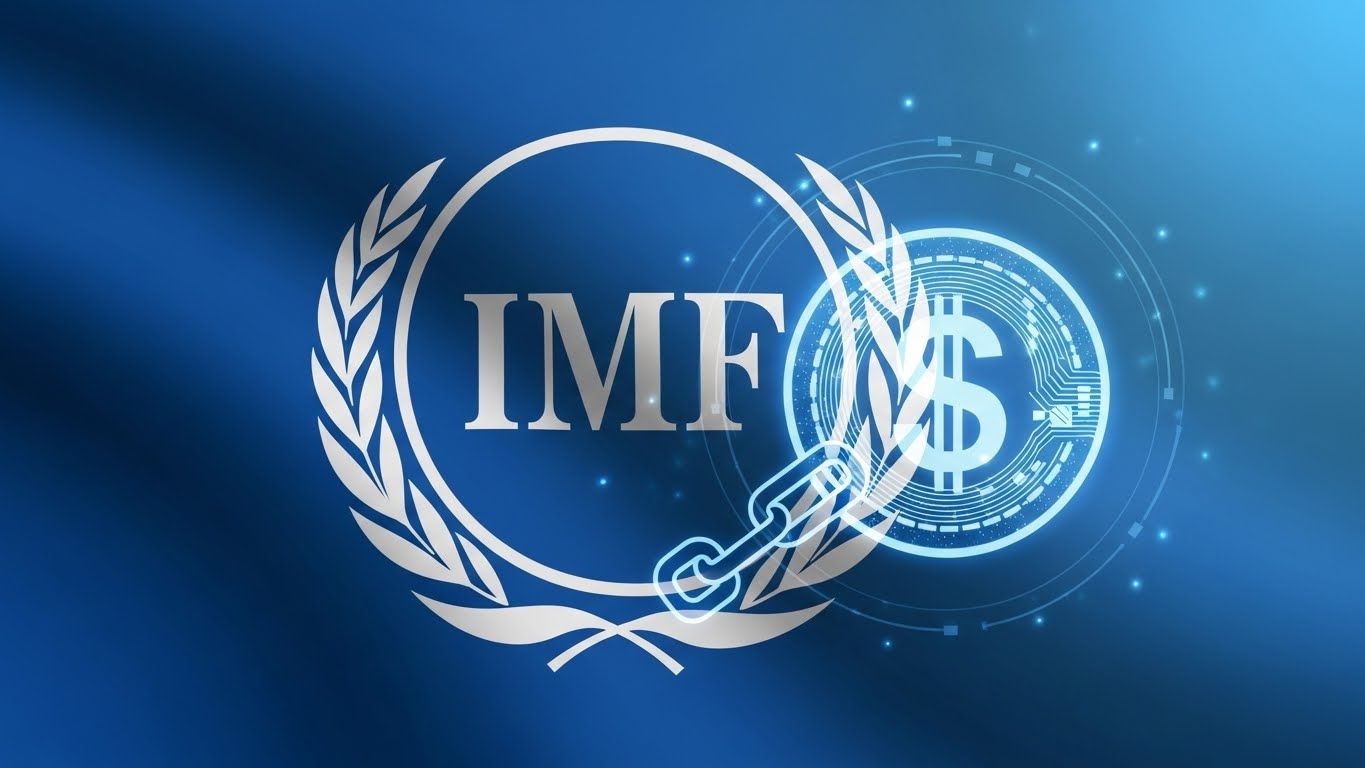
The International Monetary Fund (IMF) has issued a new report raising concerns over the rapid growth of stablecoins and arguing that they pose significant risks to monetary sovereignty and financial stability. The 56-page document ultimately promotes Central Bank Digital Currencies (CBDCs) as the preferred solution—an argument that sparked immediate criticism from crypto leaders who say the IMF is overlooking the real-world value stablecoins provide.
IMF Sounds the Alarm on Monetary Control
The IMF warned that widespread adoption of stablecoins could weaken a government’s ability to control its own currency and monetary policy. According to the report, currency substitution driven by stablecoins threatens core economic functions traditionally managed by central banks.
The organization reiterated its stance that “central bank money is the most basic, liquid and resilient form of money,” and should remain at the center of global financial systems. By contrast, stablecoins, in the IMF’s view, introduce vulnerabilities that could require central bank intervention during market stress or fire-sale events.
This position mirrors recent signals from the European Central Bank (ECB) and the Bank for International Settlements (BIS), both of which have emphasized potential stability risks if stablecoins scale without strict oversight.
Experts Say the IMF is Missing the Bigger Picture
Crypto industry leaders responded swiftly, arguing that the IMF’s perspective ignores how stablecoins already provide meaningful benefits—particularly in regions suffering from inflation, capital controls or unstable banking systems.
Gate CBO Kevin Lee argued that the debate shouldn’t be framed as a competition. He said stablecoins and CBDCs can “co-exist,” noting that central banks’ concerns about “substitution risk” overlook the broader utility of private digital money.
Erbil Karaman, co-founder of Huma.Finance, took a stronger stance. His firm has processed more than $8 billion in stablecoin transactions, and he argues that stablecoins are filling gaps left by fragile local currencies. According to Karaman, “centralized financial systems have failed these people for decades,” which is why adoption of stablecoins is accelerating in emerging markets.
Concerns Around Illicit Activity Echo Long-Standing Debates
The IMF also highlighted the risk of stablecoins being used for illicit activity, pointing to pseudonymous transfers and cross-border ease. Critics were quick to note the irony: the U.S. Treasury stated in a 2024 report that the U.S. dollar remains the world’s most commonly used currency for laundering illicit funds.
Ricardo Salinas Pliego, billionaire founder of Grupo Salinas, said official warnings are more about fear than practicality. In an interview, he argued that governments and banks see crypto as a threat to their long-held power over money.
A Shift Toward Decentralized Monetary Systems
The IMF ultimately acknowledged that the rise of stablecoins introduces competitive pressure, forcing governments to improve policy and modernize financial systems. It conceded that the presence of stablecoins could act as an incentive for better governance to avoid losing monetary authority.
Kraken co-CEO Arjun Sethi summed up what many in the crypto industry believe is truly at stake: “The power to issue and control money is diffusing away from institutions and into open systems that anyone can build on.”
The debate underscores a growing tension between centralized and decentralized models of global finance—one that is unlikely to fade as stablecoin adoption continues to grow.









https://shorturl.fm/N96Ru
Trying my luck at phrushwin tonight! Hope I win big! Anyone else had any success there? Let me know your experiences! Here’s the link if you wanna get in on the action: phrushwin