Key Points:
- Alex Mashinsky faces up to $35 million in payments under a settlement secured by New York Attorney General Letitia James, alongside a permanent ban from the securities, commodities and cryptocurrency industries.
- The enforcement action follows allegations that the former Celsius Network CEO misled hundreds of thousands of investors about the platform’s financial condition, investment risks and safety.
- Celsius creditors have received more than $3.4 billion through bankruptcy proceedings, while Mashinsky is serving a 12-year federal prison sentence in a separate criminal case.
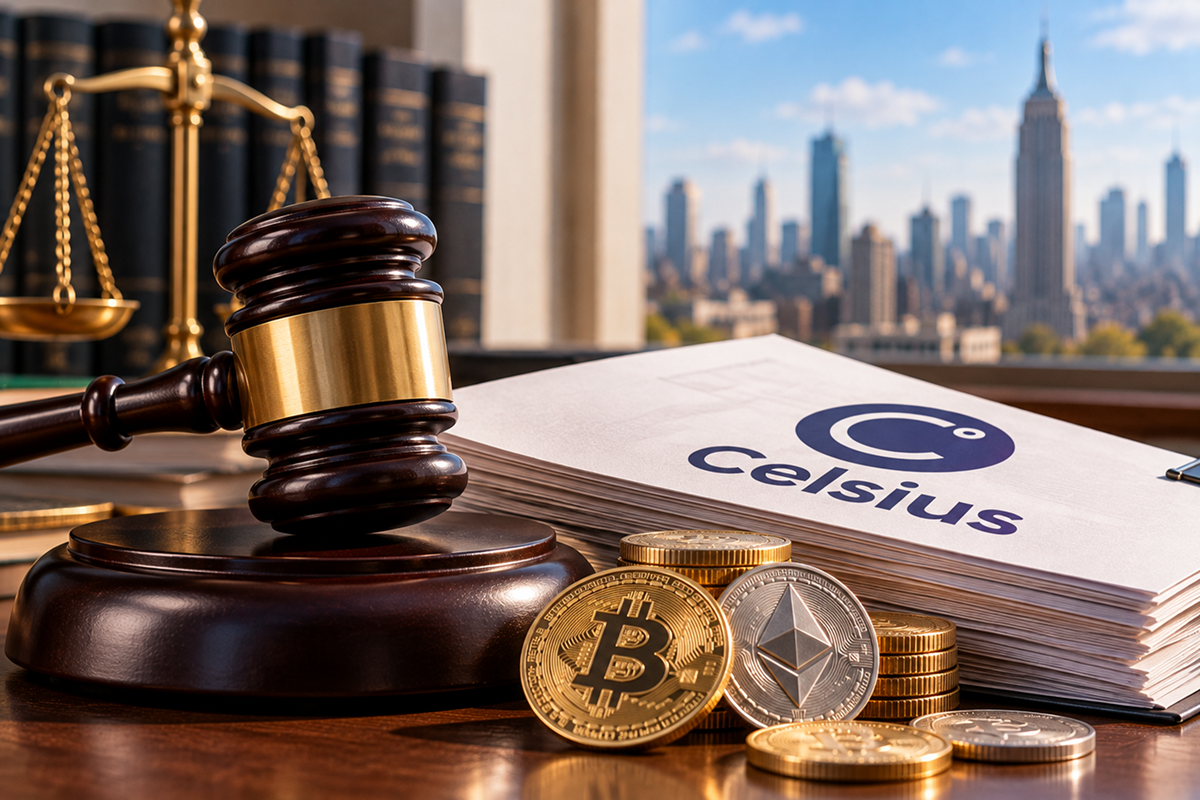
New York Attorney General Letitia James has secured a settlement imposing a permanent industry ban and up to $35 million in conditional financial obligations on Alex Mashinsky, the former chief executive of collapsed cryptocurrency lender Celsius Network. Announced on October 9, the agreement adds another layer of accountability to one of the crypto lending sector’s most consequential failures, reinforcing the legal and reputational risks associated with misleading customers about asset safety and investment strategies.
Settlement Combines Financial Penalties With a Lifetime Industry Ban
The agreement permanently bars Mashinsky from participating in the securities, commodities and cryptocurrency industries. The potential financial obligations are structured around separate conditions rather than a single unconditional $35 million payment. Mashinsky must pay $25 million to New York if he fails to forfeit $10 million in ill-gotten gains to the federal government under his criminal case. A further $10 million becomes payable if he does not serve his full prison sentence, subject to the settlement’s terms.
This structure matters for investors assessing the practical consequences of enforcement. The headline amount represents the maximum potential liability under the stated conditions, not confirmation that New York will immediately collect the entire sum. The permanent prohibition, however, restricts Mashinsky’s future participation in regulated financial and crypto businesses.
Celsius Collapse Exposed Risks in Crypto Lending
James sued Mashinsky in January 2023, alleging that he misrepresented Celsius’s safety, user numbers and investment practices to persuade customers to deposit billions of dollars in digital assets. The attorney general’s investigation found that Celsius promoted high yields and presented itself as safer than a bank, while customer assets were deployed through risky strategies and losses were concealed from investors.
Celsius operated a lending model in which customers deposited cryptocurrencies in exchange for promised rewards. Its collapse demonstrated how counterparty risk, opaque asset deployment and weak transparency can undermine the apparent appeal of yield-generating products. New York said more than 26,000 affected investors were residents of the state, underscoring the scale of the alleged harm to retail customers.
Criminal Proceedings and Creditor Recoveries Continue
Mashinsky is serving a 12-year federal prison sentence following a separate criminal case. He was also ordered to forfeit more than $48 million to the federal government. Meanwhile, Celsius bankruptcy proceedings had distributed more than $3.4 billion to creditors by August 2026, according to the New York attorney general’s office. The Federal Trade Commission separately secured a $16.5 million resolution involving Celsius founders and executives.
These proceedings illustrate the different mechanisms involved in crypto enforcement: criminal punishment, state-level investor protection, federal regulatory action and bankruptcy distributions. Although creditor recoveries can return substantial assets to customers, they do not necessarily compensate every affected investor fully or eliminate the economic damage caused by a platform’s failure.
What the Ruling Means for Crypto Firms
The settlement adds to scrutiny of crypto businesses that promise high returns while retaining discretion over how customer assets are deployed. For institutional participants, it reinforces the importance of examining custody arrangements, lending exposures, disclosure standards and management oversight before assessing a platform’s financial resilience.
Investors will now watch how the settlement’s financial conditions are implemented and whether further enforcement actions follow across the digital-asset lending sector. The broader implication is clear: customer protection and transparent risk disclosure remain central to crypto’s institutional credibility, particularly for businesses whose products resemble traditional savings or investment services without equivalent safeguards.
Comparison, examination, and analysis between investment houses
Leave your details, and an expert from our team will get back to you as soon as possible