Key Points:
- Senate Democrats allege that USDT has become a major component of Iran’s shadow banking network, based on an analysis of 846 cryptocurrency wallets sanctioned or targeted in connection with Iran and regional proxies.
- The report says 84% of the wallets analyzed transacted exclusively or almost exclusively in USDT, highlighting the stablecoin’s role in cross-border dollar-denominated transactions outside traditional banking channels.
- Tether says it has cooperated with authorities and frozen approximately $550 million in Iran-linked USDT during 2026, underscoring the competing interpretations of the stablecoin’s compliance record.
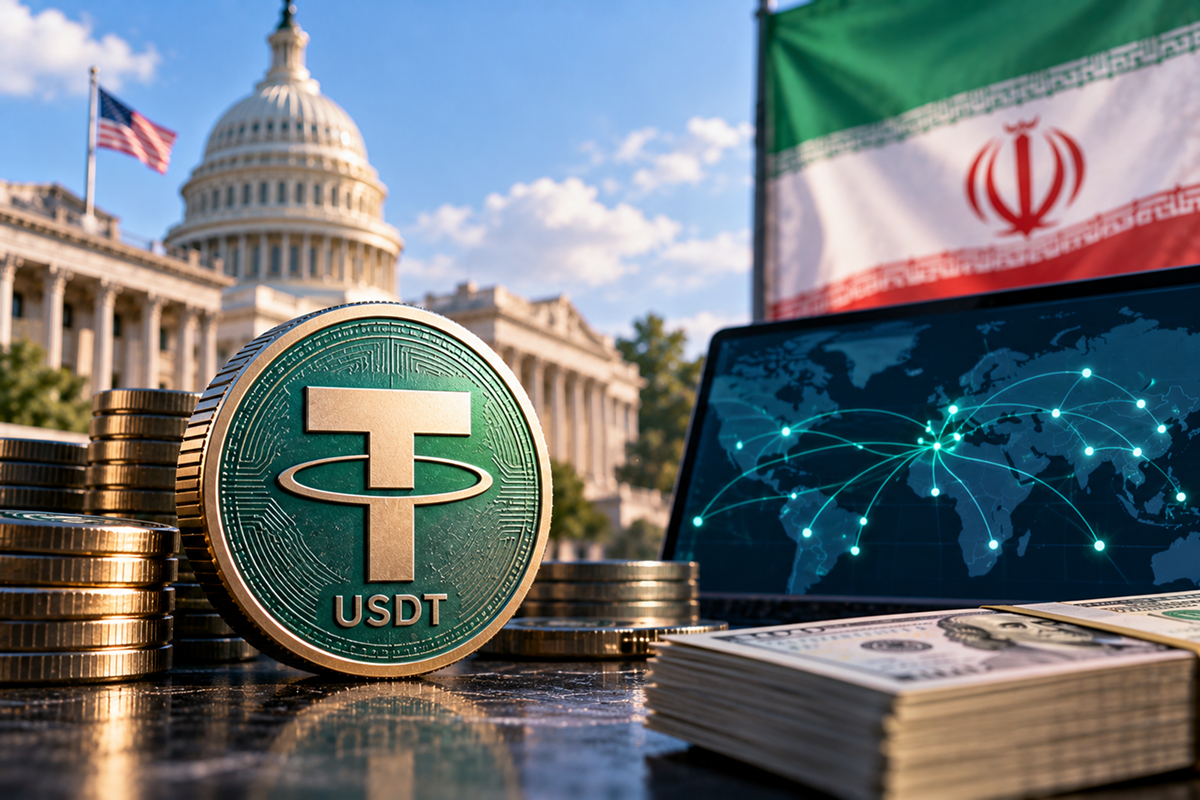
Tether’s USDT is facing renewed regulatory scrutiny after Senate Democrats released a report alleging that the dollar-pegged stablecoin has become a significant component of Iran’s shadow banking system. The report places stablecoin infrastructure at the intersection of crypto liquidity, sanctions enforcement and geopolitical finance, potentially increasing pressure on issuers and exchanges to strengthen monitoring of transactions involving sanctioned jurisdictions.
The findings are particularly relevant for crypto investors because USDT is one of the most widely used settlement assets in digital markets. Any regulatory response affecting its availability, liquidity or use across exchanges could have consequences extending beyond Iran to global stablecoin markets.
Senate Analysis Finds Extensive USDT Use
The Democratic minority on the Senate Permanent Subcommittee on Investigations analyzed blockchain activity involving 846 wallets sanctioned or targeted for seizure because of their links to Iran and regional proxies. According to the report, 84% of those wallets transacted exclusively or almost exclusively in USDT.
The report argues that USDT provides Iran with access to a liquid international payment network that can operate outside conventional banking channels. It also alleges that the network has been used for moving funds into and out of Iran, supporting Iran-linked organizations and facilitating procurement involving military equipment.
These findings describe activity identified in a specific group of sanctioned wallets and should not be interpreted as evidence that ordinary USDT transactions are connected to illicit finance.
Tether Disputes the Implication of Its Compliance Record
Tether’s response emphasizes a different aspect of the data: its ability to intervene when law enforcement identifies illicit activity. The company has said it has helped freeze approximately $550 million in Iran-linked USDT during 2026, while cooperating with authorities on investigations and sanctions enforcement.
The distinction is important because USDT’s architecture allows Tether to freeze tokens held at identified blockchain addresses. That capability gives authorities and issuers an intervention mechanism that does not exist for some native cryptocurrencies, but it also places greater responsibility on centralized stablecoin issuers to identify suspicious activity and respond to official designations.
Why the Issue Matters for Stablecoin Regulation
USDT’s scale makes the policy debate significant. Tether represents roughly 60% of the stablecoin market by capitalization, according to data cited by The Wall Street Journal. Its extensive use across global exchanges means regulatory restrictions or enhanced compliance requirements could potentially affect liquidity and settlement activity well beyond sanctioned markets.
The Senate report specifically calls for investigations by the Treasury Department and Department of Justice into Tether’s sanctions and anti-money-laundering practices. Senator Richard Blumenthal’s office said the report raises potential questions under the Bank Secrecy Act and International Emergency Economic Powers Act.
Compliance Becomes a Competitive Factor
The dispute highlights a broader transformation in the stablecoin industry. As dollar-backed tokens move from crypto trading toward payments, institutional settlement and international transfers, compliance infrastructure is becoming part of the competitive landscape.
For investors and institutions, the key variables to monitor are enforcement actions, wallet-freezing practices, stablecoin liquidity and the regulatory treatment of dollar-backed tokens. The Senate findings do not by themselves establish a legal violation by Tether, but they increase scrutiny around how stablecoin issuers respond to sanctioned activity.
Going forward, the policy response could influence how stablecoins operate across high-risk jurisdictions and how institutions assess counterparty and regulatory exposure. The central question is whether increased enforcement produces stronger controls without materially disrupting legitimate global liquidity. That balance will be important as stablecoins become increasingly embedded in the broader financial system.
Comparison, examination, and analysis between investment houses
Leave your details, and an expert from our team will get back to you as soon as possible