Key Points:
- S&P 500 options account for most of Hypercall’s reported $640 million in trading volume since the platform launched in June 2026.
- Hypercall operates on Hyperliquid, a blockchain-based trading ecosystem increasingly associated with onchain derivatives and alternative financial markets.
- Growing demand for traditional market exposure through crypto infrastructure highlights opportunities for onchain trading, alongside risks involving leverage, liquidity, and regulatory uncertainty.
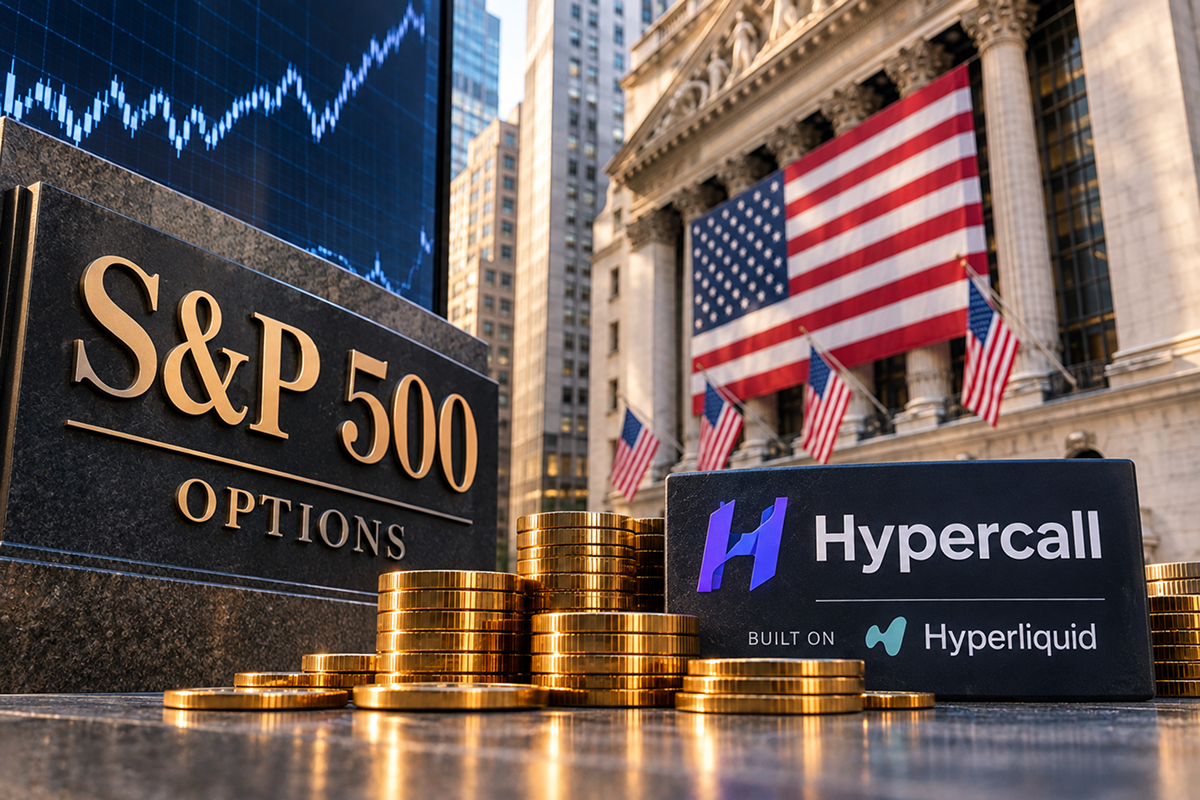
S&P 500 options have emerged as the leading trading product on Hypercall, an exchange built on the Hyperliquid ecosystem, according to information reported by CoinDesk on October 14, 2026. The platform says most of its $640 million in cumulative trading volume since June has come from contracts linked to the U.S. equity benchmark, illustrating how blockchain-based trading venues are expanding beyond cryptocurrency-native markets into traditional financial instruments.
S&P 500 Options Drive Hypercall’s Trading Activity
Hypercall’s reported volume indicates that contracts tied to the S&P 500 have become central to its early activity. The benchmark tracks large U.S. companies across multiple industries and is widely used by traders seeking exposure to broader equity-market movements. Options linked to the index can provide strategies based on expected price changes, volatility, and the passage of time.
The platform’s reported $640 million in volume since June represents cumulative trading activity, not necessarily the amount of capital deposited by users or the value of outstanding positions. Trading volume can include repeated transactions involving the same underlying exposure, making it important to distinguish turnover from assets under management, open interest, and net revenue.
Even with that distinction, the concentration in S&P 500 products suggests that traders are using crypto-related infrastructure to access familiar macroeconomic exposures. U.S. equity performance, interest-rate expectations, corporate earnings, and economic data can all influence demand for index-linked derivatives.
Hyperliquid Expands the Scope of Onchain Derivatives
Hypercall operates within Hyperliquid, a blockchain ecosystem known for derivatives trading. The platform’s focus on S&P 500 options illustrates a broader development in digital finance: onchain trading infrastructure is increasingly being used to create markets linked to assets outside the cryptocurrency sector.
For market participants, this convergence could offer an alternative way to access financial exposures through blockchain-based interfaces. Depending on the product’s structure, onchain systems may support transparent transaction records and programmable settlement. However, these characteristics do not automatically guarantee lower costs, deeper liquidity, or more efficient execution than established exchanges.
The distinction between an instrument linked to a traditional index and ownership of the underlying securities is also important. Traders should establish whether a product represents an actual listed option, a derivative referencing the index, or another contractual structure. The legal rights, settlement method, and counterparty arrangements can differ materially across these products.
Macro Trading Opportunities Come With Structural Risks
The popularity of S&P 500 options reflects the benchmark’s relevance to global macroeconomic trading. Investors and traders monitor the index for signals about economic growth, corporate profitability, and changes in financial conditions. Options can provide targeted exposure to these developments, but their value is influenced by more than the direction of the underlying market.
Implied volatility, expiration dates, liquidity, and contract specifications can significantly affect options pricing and trading outcomes. Leveraged derivatives may also magnify losses when markets move unexpectedly. On blockchain-based platforms, additional considerations include smart-contract vulnerabilities, oracle reliability, network performance, and the legal framework governing access to the products.
Trading volume alone does not establish that a market is liquid under stressed conditions. Investors assessing Hypercall’s activity would also need information on bid-ask spreads, open interest, execution quality, and the distribution of positions among participants. Those measures help determine whether reported activity reflects a durable marketplace or concentrated bursts of speculative trading.
Looking ahead, Hypercall’s ability to sustain trading activity beyond its initial $640 million in volume will be an important measure of demand for traditional financial exposure through onchain markets. Continued growth could demonstrate that blockchain-based platforms are becoming more relevant to macro trading, but long-term adoption will depend on transparent product structures, reliable liquidity, operational resilience, and regulatory clarity. The key question is whether the platform can convert early interest in S&P 500 options into a consistently functioning market across different trading conditions.
Comparison, examination, and analysis between investment houses
Leave your details, and an expert from our team will get back to you as soon as possible