

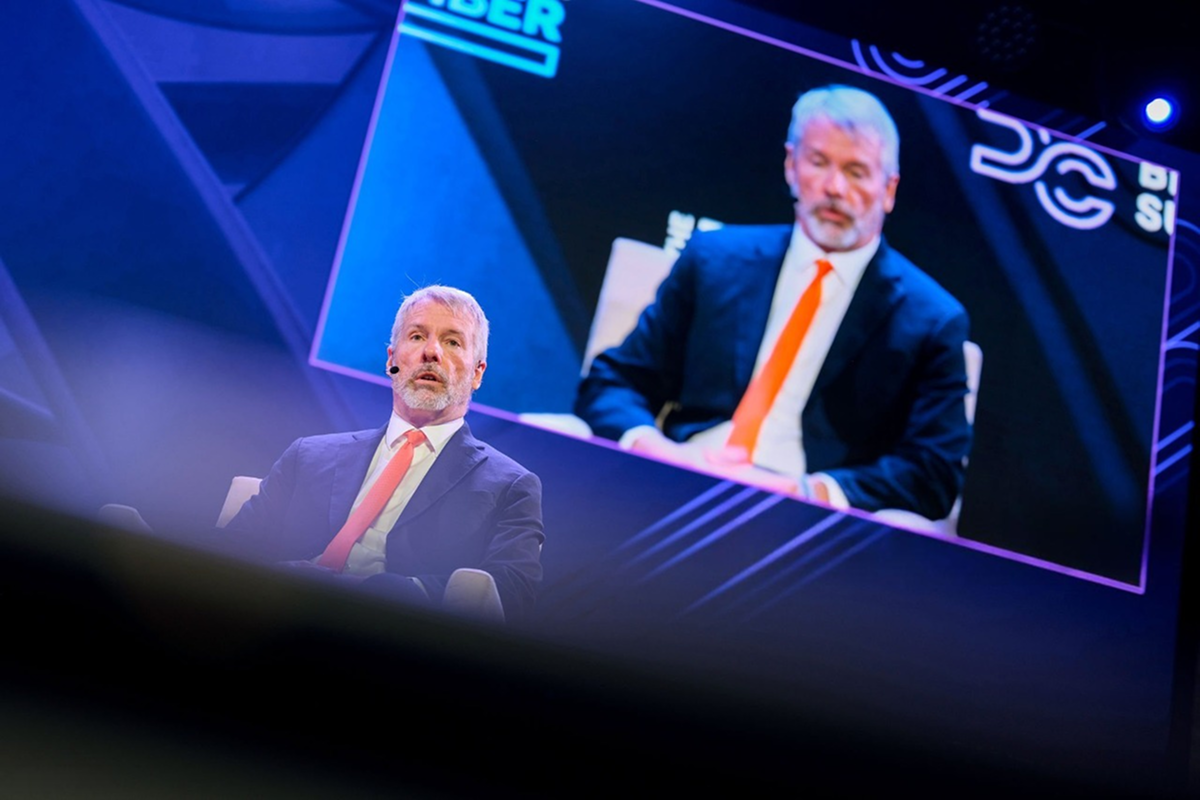
Michael Saylor’s Bitcoin strategy has become one of the most closely watched institutional plays in the digital asset space, with attention often centered on the scale of accumulation. However, a less-discussed factor—his average cost basis and capital deployment discipline—offers deeper insight into how his strategy performs across market cycles.
As Bitcoin becomes increasingly integrated into global portfolios, Saylor’s approach highlights how timing, consistency, and capital efficiency can shape long-term outcomes beyond headline holdings.
Market Context: Saylor’s Position in a Rising Bitcoin Market
Michael Saylor has overseen the accumulation of more than 200,000 BTC, placing him among the largest known corporate-aligned holders of Bitcoin. With Bitcoin trading within the $70,000–$73,000 range, his position reflects substantial unrealized gains built over multiple market cycles.
Total BTC exposure: 200,000+ BTC
BTC price range: ~$70,000–$73,000
Estimated position value: ~$14B–$15B
Rather than reacting to short-term price movements, Saylor’s strategy has consistently emphasized long-term conviction and accumulation during market weakness.
Key Metric: Cost Basis as a Strategic Advantage
One of the most critical yet overlooked elements of Saylor’s approach is his average acquisition cost, estimated between $30,000 and $35,000 per Bitcoin. This significantly lower entry point provides a substantial buffer against volatility.
Average cost basis: ~$30,000–$35,000
Unrealized gains: 100%+
Strategy edge: Early and consistent accumulation
This cost advantage allows Saylor to maintain conviction during downturns, as his position remains profitable even under significant price corrections. It also reflects disciplined capital deployment rather than reactive buying.
Investor Perspective: Long-Term Conviction Over Short-Term Timing
From an institutional perspective, Saylor’s strategy illustrates the importance of time in the market rather than timing the market. His accumulation pattern aligns with a long-term thesis centered on Bitcoin as a store of value and monetary hedge.
Derivatives data shows Bitcoin futures open interest holding near $95–100 billion, indicating strong participation across the market.
Futures open interest: ~$95B–$100B
Investor takeaway: Long-term accumulation mindset
Behaviorally, Saylor’s approach contrasts with short-term trading strategies, emphasizing consistency, conviction, and tolerance for volatility as key drivers of performance.
Risk Considerations: Leverage and Market Cycles
While Saylor’s cost basis provides a strategic advantage, his approach also involves leveraged capital and balance sheet exposure, which introduces additional risks. Changes in interest rates and macro conditions can impact the sustainability of leveraged positions.
Risk factor: Leverage exposure
Macro sensitivity: Interest rates and liquidity
This highlights the importance of evaluating not only asset performance but also the structure of capital used to acquire it.
Outlook: Measuring Strategy Through Efficiency and Discipline
Looking ahead, Michael Saylor’s Bitcoin strategy will continue to be evaluated not just by the size of his holdings, but by the efficiency and discipline behind capital allocation. As institutional participation grows, similar approaches may emerge across the market.
Investors will monitor how his strategy adapts to evolving macro conditions, particularly in areas such as funding costs, market volatility, and regulatory developments.
In the broader context, Saylor’s approach underscores a key shift in crypto investing—where success is increasingly defined by strategic execution and long-term positioning, rather than short-term price movements.
Comparison, examination, and analysis between investment houses
Leave your details, and an expert from our team will get back to you as soon as possible













Leave a comment