Key Takeaways
- THORChain is facing criticism after declining to blacklist addresses linked to the Bitget hack, highlighting the tension between decentralized protocols and centralized security demands.
- Bitget revised its estimate of the September 24 breach from $351.6 million to approximately $387.5 million after identifying additional affected assets across several networks.
- Ethereum co-founder Vitalik Buterin outlined a 2030 vision centered on cryptographic proofs, off-chain computation and faster finality, signaling a broader evolution of blockchain infrastructure.
The latest developments around Bitget, THORChain and Ethereum highlight two different pressures reshaping crypto infrastructure: the limits of decentralized governance when stolen assets move across networks, and the industry’s push toward more sophisticated cryptographic systems. The developments come as Ethereum trades near $2,690 and the broader digital-asset market remains focused on security, scalability and institutional adoption.
THORChain Faces Pressure Over Stolen Bitget Funds
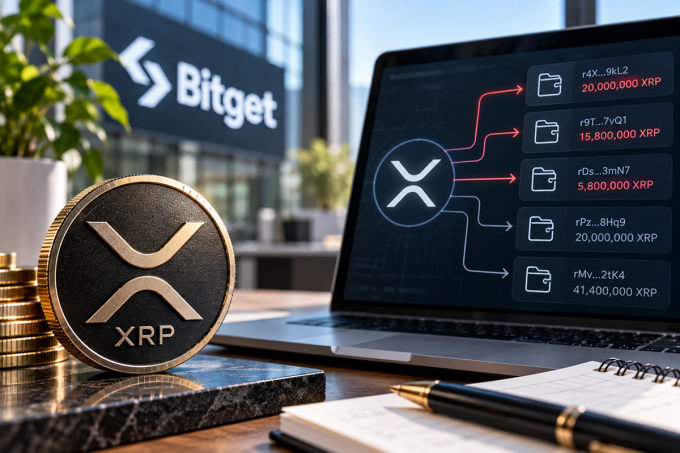
Bitget initially reported approximately $351.6 million in unauthorized transfers from hot and warm wallets on September 24, later revising the figure to about $387.5 million after accounting for additional assets. The affected assets included ETH, XRP, stablecoins, XAUT, BNB, AVAX, TRX and ZEC, with the stolen funds moving across multiple blockchain networks.
Bitget CEO Gracy Chen asked THORChain to block addresses associated with the exploit. THORChain declined, reflecting the protocol’s decentralized architecture and the absence of a centralized authority that can simply impose transaction-level restrictions.
The dispute has broader implications. THORChain was previously used to move a substantial portion of funds stolen in the $1.5 billion Bybit attack, putting cross-chain liquidity protocols under greater scrutiny when illicit assets enter decentralized markets.
Decentralization Meets Institutional Security Requirements
The Bitget episode illustrates a structural conflict between permissionless infrastructure and institutional expectations around asset recovery. Centralized exchanges can freeze accounts and coordinate investigations, while decentralized protocols generally operate through predefined code, liquidity pools and distributed validators or node operators.
That distinction is increasingly important as institutional capital enters crypto markets. Ethereum was trading around $2,690 on September 28, with daily volume above 216,000 ETH, while the ETH/BTC ratio stood near 0.0318. The continued scale of activity means infrastructure decisions involving asset tracing and transaction censorship increasingly have consequences beyond individual protocols.
Ethereum Moves Toward a Cryptographic Computing Platform
Separately, Vitalik Buterin outlined a vision for Ethereum extending beyond its traditional role as a blockchain. His proposed architecture would use cryptographic proofs and off-chain computation to allow more processing without requiring every participant to independently repeat the same calculations.
Buterin’s roadmap points toward shorter transaction slots of roughly four to eight seconds and finality in approximately eight to 32 seconds by 2030. The planned Hegotá upgrade is expected to precede a longer-term shift toward recursive STARKs, formal verification and stronger quantum-resistance measures.
Infrastructure Becomes the Central Investment Theme
The Bitget-THORChain dispute and Ethereum’s technological roadmap point to the same underlying issue: crypto infrastructure is becoming more complex as transaction values and institutional participation increase. The next stage will depend on whether decentralized protocols can preserve permissionless settlement while developing credible mechanisms for security, verification and risk management, while Ethereum’s evolution will be measured by whether its cryptographic architecture can deliver greater scalability without weakening decentralization or user-level privacy.
Comparison, examination, and analysis between investment houses
Leave your details, and an expert from our team will get back to you as soon as possible