Key Points:
- A planned Bermuda issuance aims to bring catastrophe bonds onchain, placing legal ownership on blockchain infrastructure while raising capital for disaster-related risks.
- Tokenization could broaden access to insurance-linked securities and improve transaction efficiency, but it does not eliminate the underlying financial risks of natural disasters.
- Legal enforceability, investor protection and catastrophe-risk assessment will be central to determining whether tokenized bonds can attract institutional capital at scale.
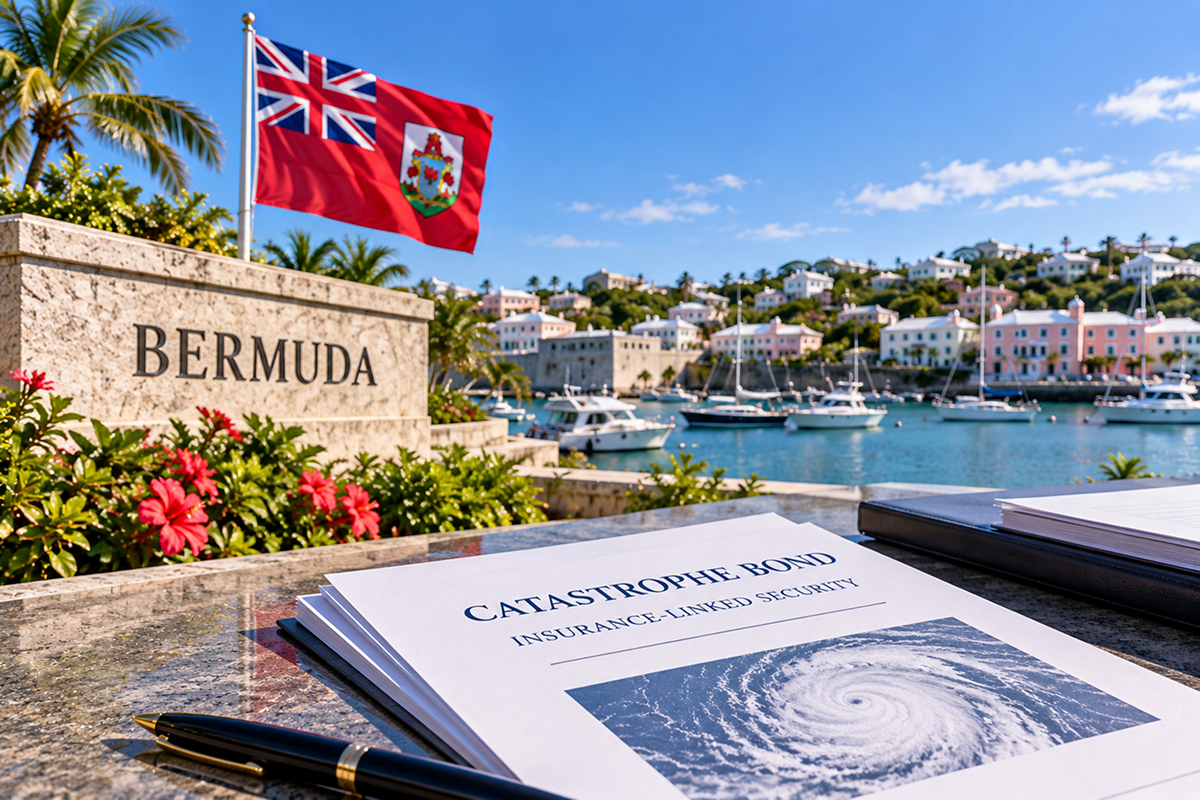
A planned catastrophe-bond issuance in Bermuda is seeking to connect blockchain-based ownership with a longstanding challenge in global insurance: financing disaster risks that remain expensive or difficult to cover. The initiative reflects a broader effort to use tokenization to modernize financial-market infrastructure, while directing private capital toward losses associated with hurricanes and other catastrophic events.
Closing the Gap in Disaster-Risk Financing
Catastrophe bonds, commonly known as cat bonds, allow insurers and other risk sponsors to transfer specified disaster risks to investors. Investors receive compensation for taking on that exposure, but may lose some or all of their principal if a defined event triggers the bond’s loss provisions. The structure provides insurers with an additional source of risk-bearing capital beyond conventional reinsurance.
The need for such financing is significant because not all disaster-related losses are insured. When insurance becomes too costly or unavailable, households, businesses and governments can face substantial financial burdens after a catastrophe. Capital-market instruments can help insurers distribute certain risks among investors, potentially increasing the capacity available to cover severe events.
The planned Bermuda issuance would place legal ownership onchain and seek capital for risks that remain costly to insure. However, the announcement alone does not establish the offering’s final size, expected return, pricing or investor participation. Those details will be important in assessing the transaction’s potential scale and its significance for the broader insurance-linked securities market.
What Tokenization Could Change
Tokenization represents ownership interests through digital tokens recorded on a blockchain. Applied to catastrophe bonds, this approach could streamline ownership records, simplify transfers and potentially reduce some administrative friction associated with issuing and managing securities. It may also create opportunities for more efficient participation by investors who already operate within digital-asset infrastructure.
For institutional investors, the attraction is not simply the use of blockchain technology. Catastrophe bonds can provide exposure to risks driven by weather events and insurance losses rather than solely by movements in equity or cryptocurrency markets. Their diversification potential, however, depends on the specific catastrophe exposures, geographic concentrations and contractual triggers embedded in each issuance.
Onchain ownership does not remove the underlying insurance risk. Investors must still understand the legal structure, collateral arrangements, event definitions and conditions under which principal can be impaired. Blockchain records may improve transparency around certain transactions, but they cannot independently verify every physical loss or determine how contractual disputes should be resolved.
Bermuda’s Role in Insurance-Linked Finance
Bermuda has an established position in international reinsurance and insurance-linked securities, making it a relevant jurisdiction for experimentation at the intersection of insurance and digital finance. A tokenized issuance there could test whether blockchain infrastructure can operate within existing legal frameworks for sophisticated financial products.
The key challenge will be ensuring that digital records correspond to enforceable ownership rights and recognized claims against the relevant assets or issuing structure. Investors will also need clarity on custody, transfer restrictions, regulatory oversight and the procedures governing a catastrophe-related payout. These considerations become particularly important when securities move between participants operating through different financial systems.
For the broader tokenization sector, the transaction could provide a practical test of whether blockchain-based securities can support complex financing arrangements beyond conventional stocks and bonds. Its significance will depend on execution and investor participation, rather than the technology alone.
What Investors Should Watch Next
The next milestones include the issuance’s final terms, its legal and collateral structure, the catastrophe risks covered and the level of investor demand. Market participants will also be watching whether the model can be replicated without compromising disclosure or investor protections. Tokenized catastrophe bonds could help connect capital markets with an important insurance-financing need, but their long-term viability will depend on transparent risk allocation, enforceable legal rights and credible catastrophe modelling. If those foundations are established, the approach could offer a new route for financing risks that conventional insurance markets struggle to absorb.
Comparison, examination, and analysis between investment houses
Leave your details, and an expert from our team will get back to you as soon as possible