Key Points:
- Tron processes roughly $150 billion to $190 billion in stablecoin transfers each week, positioning the network as a major settlement layer for Tether’s USDT.
- Network activity has approached 100 million transactions per week, while average transaction fees have fallen to roughly seven cents, reinforcing Tron’s payments-focused economics.
- The outlook for Tron increasingly depends on stablecoin regulation, USDT adoption and network activity, rather than competition based primarily on decentralized applications or programmability.
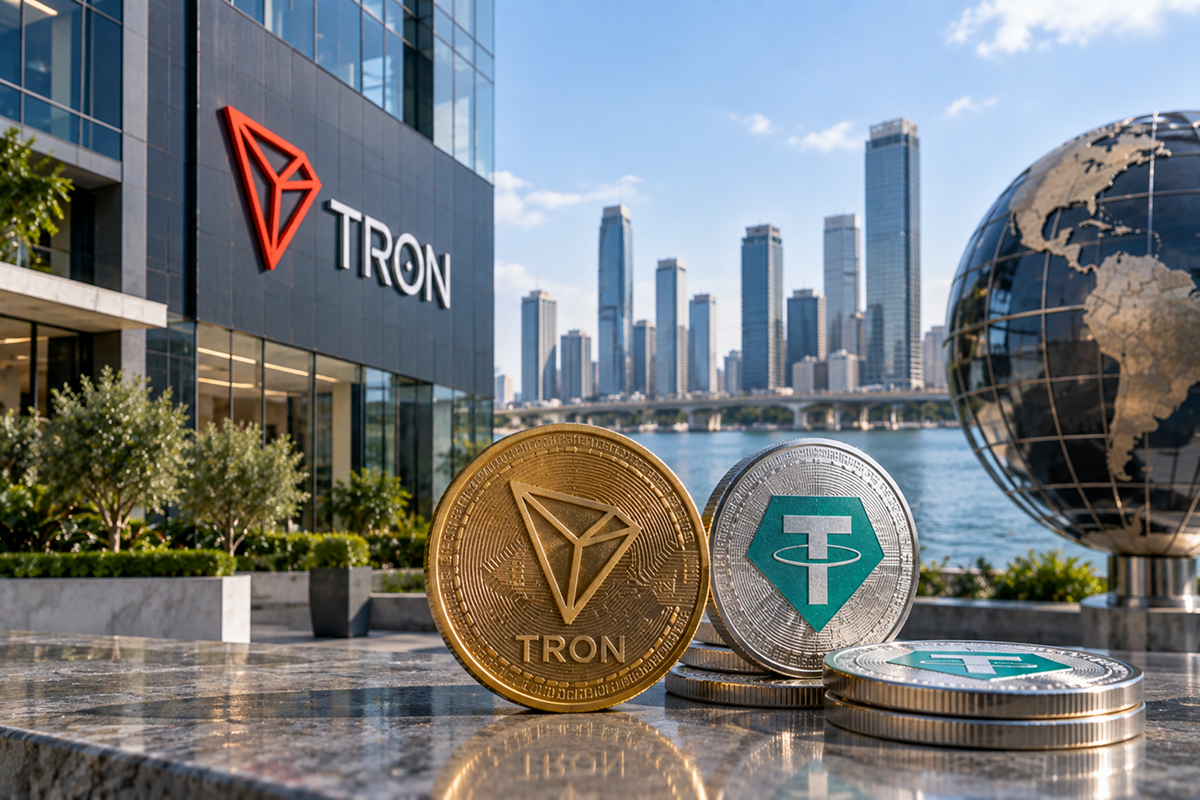
Tron has evolved from a blockchain initially designed around decentralized content distribution into a major settlement network for stablecoins, processing approximately $150 billion to $190 billion in transfers each week. That shift has created a distinct investment thesis around TRX: instead of relying primarily on decentralized applications, the network’s economic relevance is increasingly tied to the growth of blockchain-based dollar settlement and payments.
Tron’s Stablecoin Infrastructure Has Reached Global Scale
According to analysis by Josh Olszewicz, portfolio manager and head of trading at Canary Capital, Tron has become one of the most heavily used networks for stablecoin settlement, particularly for Tether’s USDT. The network was launched in 2018 after initially operating with an ERC-20 token on Ethereum before migrating to its own blockchain.
Its current role is materially different from the original vision. Tron’s combination of relatively low costs and fast settlement has made it particularly relevant in emerging markets, where stablecoins can function as digital dollar infrastructure. Weekly stablecoin transfer volume has recently reached between $150 billion and $190 billion, illustrating the scale of economic activity moving through the network.
Low Fees and Rising Activity Shape the TRX Economics
Tron’s usage metrics reinforce the importance of its settlement role. Weekly transaction counts have approached 100 million, while the average on-chain transaction fee has fallen to approximately seven cents, according to the CoinDesk analysis. Weekly active addresses have also moved toward record levels, suggesting that activity is not confined to a narrow group of users.
The network operates using delegated proof-of-stake, with TRX holders able to stake tokens for voting power and network resources. Twenty-seven elected Super Representatives validate transactions and produce blocks. Users can consume TRX directly for transactions, generating token burns, or stake TRX to receive bandwidth and energy allowances.
Unlike Bitcoin, TRX does not have a fixed maximum supply. Its economics instead reflect the interaction between issuance, staking and token burning. This creates a connection between network utilization and token economics, although broader digital-asset market conditions remain an important factor in TRX’s valuation.
Stablecoin Regulation Could Reshape the Thesis
The regulatory environment is becoming increasingly important because stablecoins represent the core of Tron’s economic activity. The GENIUS Act, enacted in July 2025, established a federal framework for payment stablecoins covering issuers, reserves and supervision. For a network heavily dependent on USDT settlement, regulatory changes affecting which stablecoins can circulate could directly influence transaction activity.
Clearer rules could support greater institutional adoption of stablecoin payments, potentially strengthening demand for established settlement infrastructure. At the same time, restrictions on issuers or eligible stablecoins could create a headwind if significant volumes were redirected elsewhere. The proposed CLARITY Act could also affect the regulatory treatment of digital assets, although its final form and implications remain uncertain.
Tron’s Next Test Is Sustaining Real Economic Activity
For sophisticated crypto investors, Tron’s significance increasingly rests on whether stablecoin settlement continues translating into durable network activity and sustainable token economics. The key indicators to monitor are USDT circulation on Tron, weekly transfer volumes, active addresses, transaction fees and TRX staking and burning dynamics.
The broader institutionalization of stablecoins could expand the market for blockchain settlement, but competition between networks remains intense. Tron’s ability to preserve its position as a low-cost, high-volume settlement rail while adapting to evolving regulation will determine whether today’s transaction scale develops into a durable infrastructure advantage or becomes vulnerable to changes in stablecoin issuance and market structure.
Comparison, examination, and analysis between investment houses
Leave your details, and an expert from our team will get back to you as soon as possible