Key Points:
- Investors are using tokenized stocks for smaller transactions and trading outside conventional stock-market hours.
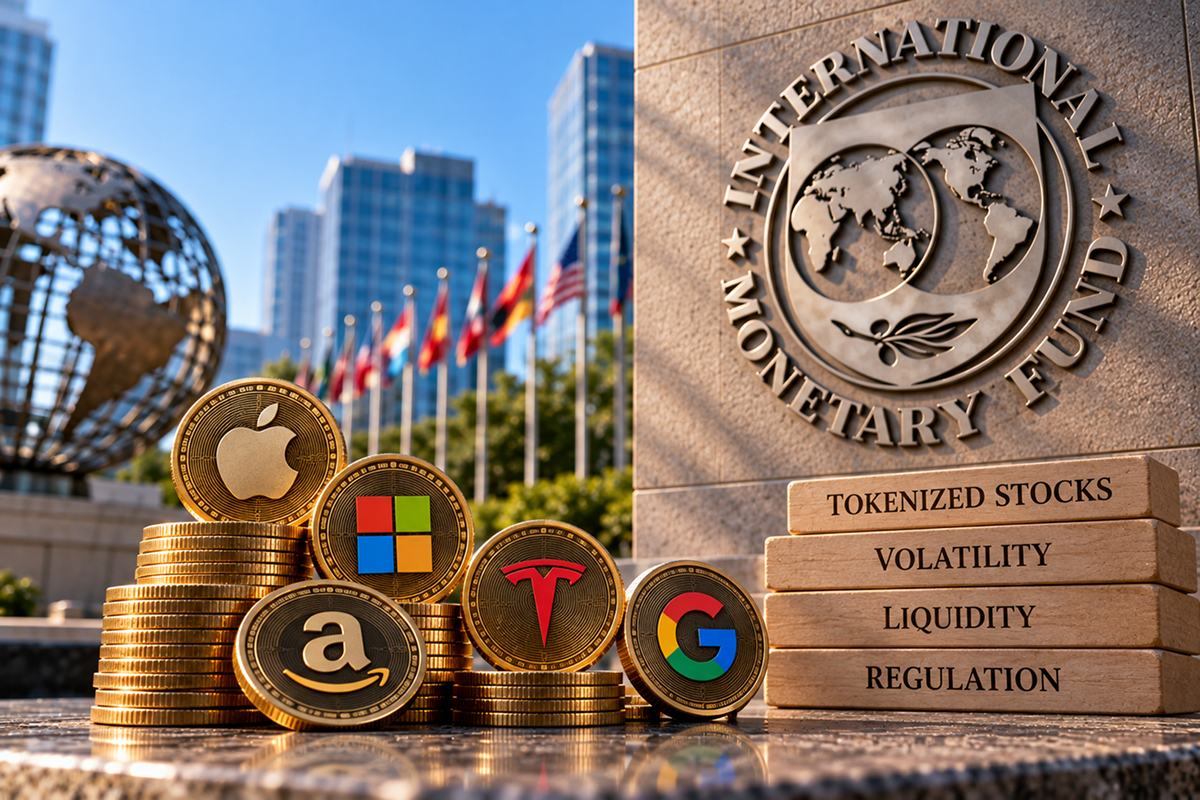
- The International Monetary Fund (IMF) warns that liquidity, legal frameworks and settlement infrastructure have not yet developed sufficiently to support broader adoption.
- Tokenized equities could expand access to financial markets, but price volatility, fragmented trading and uncertain ownership rights remain important risks.
Blockchain-based representations of publicly traded shares are attracting investor interest, particularly for smaller transactions and trading beyond traditional market hours. However, an assessment by the International Monetary Fund highlights a gap between the convenience these products offer and the market infrastructure needed to support them reliably, raising important questions for investors and financial institutions evaluating the future of tokenized securities.
Demand Reflects Interest in More Flexible Trading
Tokenized stocks represent or provide economic exposure to shares through blockchain-based instruments. Depending on their legal structure, they may convey ownership rights, contractual claims or exposure linked to an underlying security. Their appeal includes the potential to transfer assets through digital infrastructure and facilitate transactions at times when conventional exchanges are closed.
The IMF’s findings suggest that investors are already using these instruments for smaller trades and after-hours transactions. Such activity points to demand for greater flexibility, particularly among participants who value digital access and the ability to transact outside established trading schedules.
Yet convenience does not necessarily translate into equivalent market quality. Traditional stock exchanges operate within established systems for price discovery, investor protection, clearing and settlement. Tokenized products may trade through separate venues with different participants and liquidity conditions. As a result, the availability of a blockchain-based share does not guarantee that investors can execute large orders efficiently or obtain the same protections associated with conventional securities.
Liquidity and Legal Protections Remain Key Weaknesses
The IMF’s findings point to a market that offers practical benefits but remains small and fragmented compared with conventional equity trading. More than half of trading in the U.S. tokenized-equity markets studied occurred outside regular market hours, while approximately 80% of transactions involved less than one share. These figures indicate demand for extended access and fractional trading, but also show that activity is concentrated in smaller transactions.
The report also found that realized volatility in tokenized stocks was approximately 1.5 times higher than in traditional markets. Thin order books can magnify the price impact of relatively modest orders, while fragmented trading venues may produce inconsistent prices. Investors may also face uncertainty over whether a token conveys actual shareholder rights or merely contractual exposure to a stock’s price.
Settlement presents another challenge. Blockchain technology can coordinate transactions and potentially shorten settlement times, but the legal ownership records, custody arrangements and dispute-resolution mechanisms must still function reliably. As the IMF has emphasized in its broader work on tokenized finance, faster transactions can reduce some operational frictions while creating new demands for liquidity and risk management.
What Comes Next for Tokenized Equities?
The next phase will depend on whether regulators and financial institutions can align blockchain-based trading with established securities protections. Investors will be watching for deeper liquidity, clearer ownership rights and more reliable links between tokenized instruments and their underlying shares. Tokenization may broaden market access, but sustained adoption requires more than technological efficiency: it depends on credible legal frameworks, resilient settlement infrastructure and transparent pricing. Until those foundations mature, tokenized stocks are likely to offer useful trading flexibility while retaining risks that distinguish them from conventional equities.
Comparison, examination, and analysis between investment houses
Leave your details, and an expert from our team will get back to you as soon as possible