Key Points:
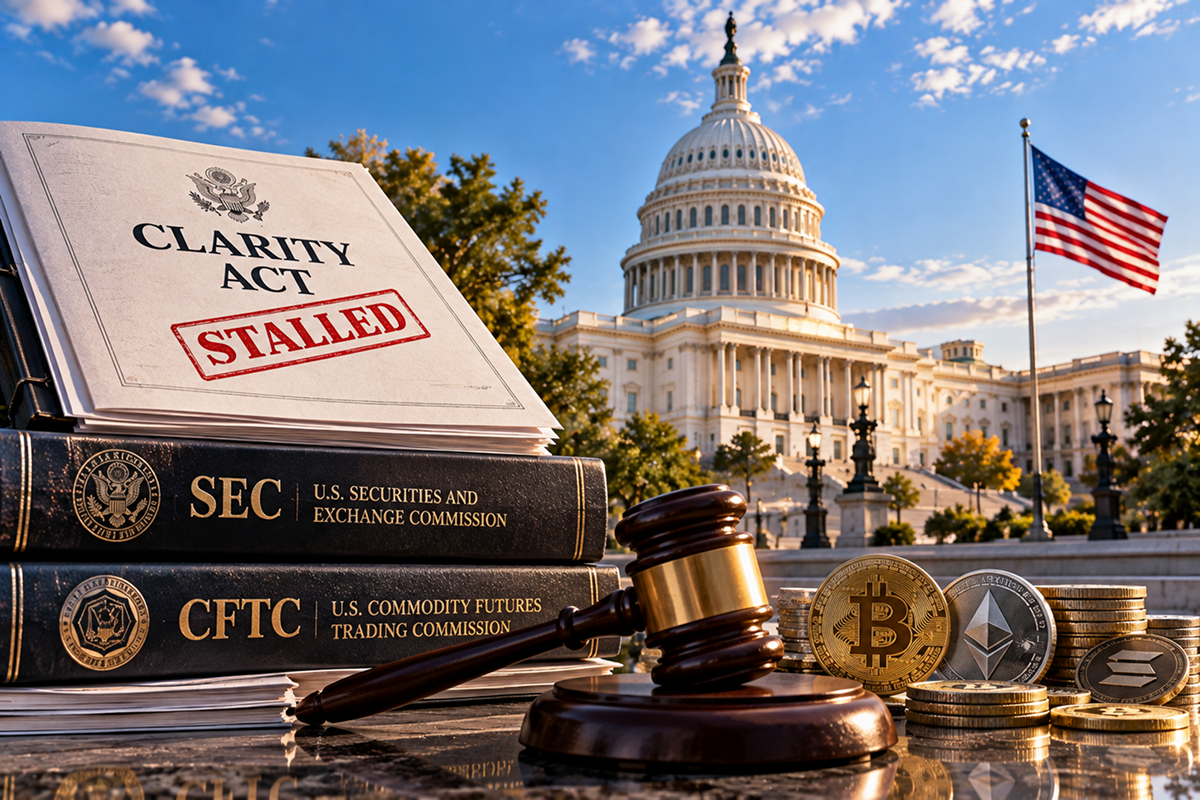
- The CLARITY Act failed to advance in the U.S. Senate, leaving comprehensive federal rules for digital-asset markets unresolved.
- SEC and CFTC initiatives could create new opportunities for tokenization, decentralized finance (DeFi) and blockchain-based trading, even without new legislation.
- Regulatory uncertainty may favor established firms with the resources to manage compliance, while smaller companies face continued legal and operational challenges.
The failure of the U.S. Digital Asset Market Clarity Act to advance has shifted attention toward regulators and the rules they can develop under existing authority. While crypto executives see potential openings for tokenized assets, decentralized finance and new commercial partnerships, legal experts warn that agency initiatives cannot fully replace legislation defining long-term oversight of digital-asset markets.
Congressional Setback Shifts Attention to Regulators
The Senate procedural vote on September 15 ended with 49 votes in favor and 50 against, falling short of the 60 votes required to advance the measure. The legislation was intended to establish a clearer framework for digital assets, including the division of responsibilities between federal regulators. Its failure leaves businesses operating amid overlapping rules, differing legal interpretations and uncertainty about future requirements.
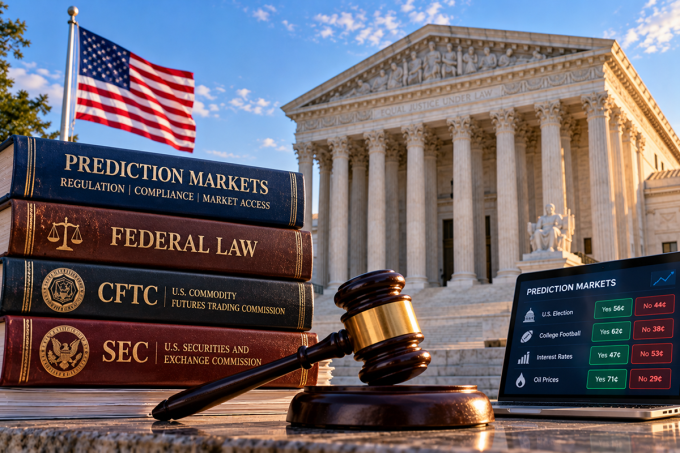
The immediate consequence is not a complete regulatory standstill. Instead, the Securities and Exchange Commission (SEC) and Commodity Futures Trading Commission (CFTC) are pursuing initiatives within their existing statutory powers. This approach could provide practical routes for some products to reach the market, but it does not offer the same durability as a comprehensive law enacted by Congress.
For crypto businesses, the distinction is significant. Agency rules and exemptions can create opportunities for innovation, yet their scope, conditions and potential exposure to legal challenges must be evaluated separately. Companies cannot assume that progress in one segment of the market resolves uncertainty across the entire industry.
Tokenization and DeFi Find New Regulatory Openings
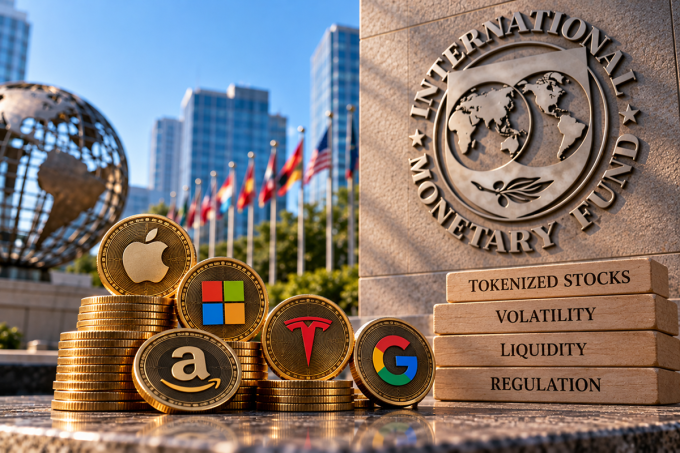
One area of potential progress is tokenization, which uses blockchain networks to represent financial assets and facilitate their transfer and settlement. On September 17, the SEC issued a conditional five-year exemptive order allowing qualifying tokenized-securities venues to operate under specified conditions without registering as traditional stock exchanges. The initiative illustrates how regulators may enable selected blockchain-based activities even as broader crypto legislation remains stalled.
Such measures could support new trading infrastructure, including platforms designed to offer extended trading hours and more efficient settlement. They may also create opportunities for crypto firms to collaborate with established financial institutions. However, the exemption is conditional and limited in scope; it should not be interpreted as blanket authorization for every tokenized asset or trading platform.
Decentralized finance presents a more complicated challenge. Developers and entrepreneurs may continue experimenting with on-chain lending, trading and settlement, but uncertainty over intermediary responsibilities, securities laws and compliance obligations remains. The absence of comprehensive legislation could encourage some forms of innovation while making institutional participation harder to structure consistently.
Why Established Companies Could Benefit
The regulatory gap may create a competitive advantage for incumbent firms. Large exchanges, financial institutions and established crypto companies generally have greater resources to maintain legal teams, compliance systems, surveillance infrastructure and regulatory relationships. Smaller entrants may find it more difficult to absorb those costs while developing new products.
The CFTC’s October 5 proposal for a federal oversight framework covering crypto platforms offering leveraged or margined trading illustrates this dynamic. The proposed approach would establish a category of regulated crypto-asset markets, with requirements involving anti-manipulation controls and proof of reserves. Yet the initiative does not resolve every question surrounding ordinary spot-market oversight, and its durability remains uncertain without congressional action.
Consequently, regulatory activity can create opportunities while also reinforcing existing market structures. Established firms may be better positioned to qualify for exemptions or meet demanding compliance standards, potentially concentrating activity among a smaller group of operators. That outcome is possible, rather than inevitable, and will depend on the final scope of regulatory measures and their implementation.
What Comes Next for U.S. Crypto Regulation?
The central question is whether agency-led initiatives can provide enough consistency for businesses and institutional investors to plan beyond the near term. Market participants will be watching the development of SEC and CFTC rules, the legal treatment of DeFi platforms and whether Congress revisits comprehensive legislation. Regulatory flexibility may accelerate selected innovations, but lasting certainty remains unresolved. Until a more durable framework emerges, companies will need to weigh new opportunities in tokenization and on-chain finance against legal uncertainty, compliance costs and the possibility that future rules could change the competitive landscape.
Comparison, examination, and analysis between investment houses
Leave your details, and an expert from our team will get back to you as soon as possible