Key Points:
- Mastercard has launched the Global Money Platform, combining its global payments network with BVNK’s stablecoin infrastructure.
- The platform enables businesses to hold, transfer, and spend traditional currencies and digital dollars through a single connection.
- The initiative highlights growing institutional adoption of stablecoins, while regulatory compliance, liquidity, and interoperability remain critical to broader implementation.
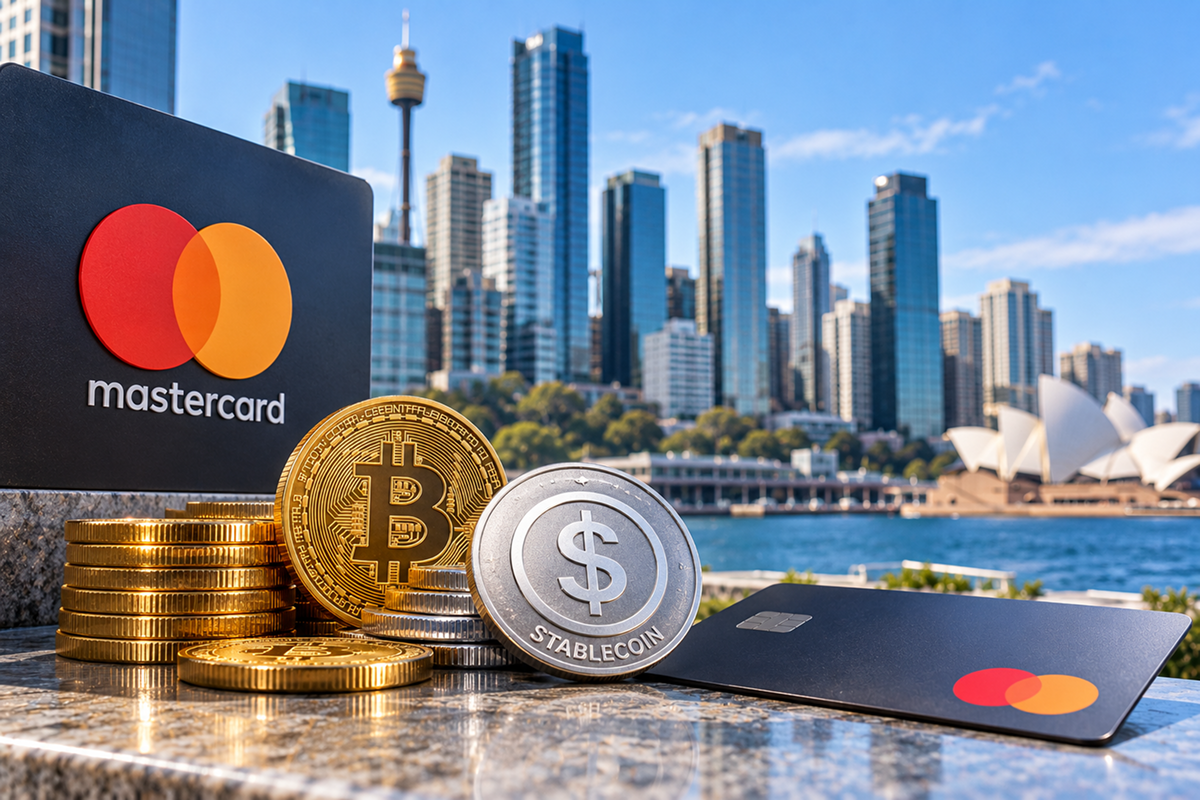
Mastercard is expanding its digital-asset strategy with the launch of its Global Money Platform, a service designed to connect traditional currencies with stablecoins through a unified payments infrastructure. Announced on October 15, 2026, the initiative combines Mastercard’s established global network with the stablecoin technology of BVNK, the cryptocurrency infrastructure company Mastercard acquired in August, reflecting the growing convergence of conventional payments and blockchain-based financial services.
Mastercard Integrates Stablecoins Into Its Payments Network
The Global Money Platform is designed to allow businesses to hold, move, and spend fiat currencies and stablecoins through a single connection. Rather than requiring companies to manage entirely separate systems for conventional money and digital dollars, the platform aims to simplify access to both payment methods.
The approach could be particularly relevant to businesses operating across multiple countries, where international transfers, currency conversion, and settlement procedures can create operational complexity. Stablecoins may offer an alternative mechanism for transferring value across blockchain networks, depending on the currencies, networks, and service providers involved.
Mastercard’s existing payment infrastructure provides an established distribution network, while BVNK contributes technology focused on blockchain-based payments. Combining these capabilities could help businesses integrate stablecoin transactions into existing financial operations without requiring them to build every component independently.
However, the platform’s practical benefits will depend on its supported markets, transaction costs, settlement arrangements, and the availability of participating financial institutions. The announcement alone does not establish how much transaction volume the service will process or how quickly businesses will adopt it.
BVNK Acquisition Strengthens Mastercard’s Digital-Asset Strategy
The platform follows Mastercard’s acquisition of BVNK in August 2026, bringing stablecoin infrastructure into the payments company’s broader technology strategy. The integration illustrates how established financial-services businesses are increasingly exploring blockchain technology through acquisitions and partnerships rather than developing every capability internally.
For Mastercard, the initiative creates a potential bridge between its conventional payments ecosystem and digital-dollar transactions. Businesses could benefit from accessing both systems through a more coordinated arrangement, although the precise functionality will depend on how the platform connects with existing banking relationships and payment channels.
The broader strategic significance lies in the potential expansion of stablecoins beyond cryptocurrency trading. Digital dollars are increasingly being considered for cross-border transfers, business payments, and treasury operations. If integrated effectively into established payment networks, they could become more accessible to companies that do not specialize in digital assets.
Stablecoin Adoption Depends on Trust and Regulation
Despite the potential efficiencies, stablecoins introduce distinct regulatory and operational considerations. Businesses must assess issuer credibility, reserve arrangements, redemption procedures, custody, cybersecurity, and the legal requirements applicable in each jurisdiction where transactions occur.
Cross-border payments also involve compliance obligations relating to customer identification, sanctions screening, and anti-money-laundering controls. A unified interface may simplify the user experience, but it does not eliminate the underlying legal responsibilities of participating businesses and financial intermediaries.
Interoperability is another consideration. Stablecoins operate across different blockchain networks, and not every token or network is compatible with every payment system. Effective integration will require reliable settlement procedures, transparent fees, and clear arrangements for resolving failed or delayed transactions.
Looking ahead, Mastercard’s ability to convert the Global Money Platform into a widely used business payments service will depend on adoption, regulatory execution, and measurable improvements in cross-border money movement. Investors will monitor supported currencies, participating institutions, transaction volumes, and the platform’s ability to connect traditional payment channels with blockchain infrastructure. The initiative represents a significant step in Mastercard’s stablecoin strategy, but its long-term commercial impact will depend on whether businesses find the combined system more efficient and reliable than existing alternatives.
Comparison, examination, and analysis between investment houses
Leave your details, and an expert from our team will get back to you as soon as possible