Key Points:
- The Bank of Korea (BOK) has surveyed 18 banks and 13 securities firms about their exposure to a hypothetical major cryptocurrency exchange shutdown following a cyberattack.
- The first-of-its-kind questionnaire also examines the impact of a prolonged crypto market downturn, losses at another financial institution, and firms’ digital-asset budgets and investments.
- The exercise reflects growing connections between conventional finance and digital assets, although the central bank says it has not identified materialized financial-stability risks or decided on new regulatory measures.
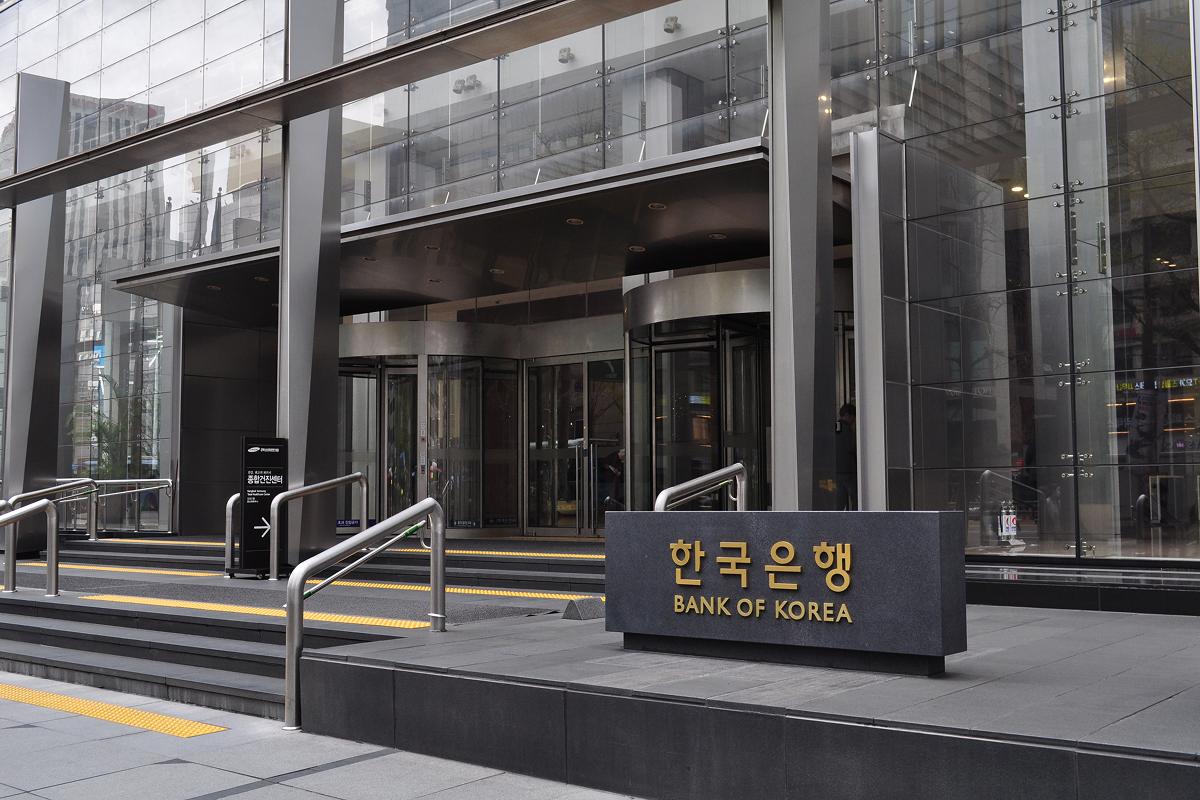
South Korea’s central bank is examining how deeply a major cryptocurrency exchange failure could affect the country’s traditional financial system, asking its largest banks and securities firms to assess their potential exposure. The initiative follows Binance’s reported multibillion-dollar security breach and comes as financial institutions expand their involvement in digital assets, raising questions about whether operational failures in crypto markets could transmit losses into conventional banking and brokerage activities.
Central Bank Expands Its View of Crypto Exposure
The Bank of Korea sent its first such survey on October 23 to 18 banks and 13 securities firms, requesting responses by November 4, according to Yonhap. The institutions include major lenders such as KB Kookmin, Shinhan, Hana, Woori and NH NongHyup. The survey is intended to provide the central bank with a more detailed picture of financial companies’ digital-asset activities.
A BOK official told The Herald Business that existing business reports and information provided to the Financial Supervisory Service do not offer sufficient detail about these operations. The questionnaire therefore seeks information beyond conventional financial reporting, including the size of crypto-related teams, allocated budgets, business plans and investments in domestic and overseas digital-asset companies. This information could help authorities identify areas of growing exposure that standard reporting may not adequately capture.
Three Scenarios Test Potential Financial Contagion
The survey examines several possible stress events. One scenario considers the country’s largest cryptocurrency exchange suspending operations after a major hack. Another asks how institutions would respond to a sharp decline in cryptocurrency prices followed by a prolonged contraction in trading activity. A third examines the consequences of substantial crypto-related losses at another financial institution.
These scenarios matter because financial exposure does not necessarily require a bank to hold large quantities of cryptocurrencies directly. Exchange disruptions could affect customer funds, banking relationships and payment arrangements, while falling token prices could weaken borrowers or counterparties connected to digital-asset businesses. Losses at one institution could also create concerns about other firms with similar exposures. The survey does not establish that these outcomes are likely; it is designed to assess how institutions might withstand them.
Existing Banking Links Make the Exercise Relevant
South Korea already has formal connections between cryptocurrency exchanges and traditional banks. Under customer-protection rules introduced in 2024, exchanges must hold customer cash deposits in bank accounts separately from their own funds. Banks are required to return those deposits directly to customers if an exchange becomes bankrupt or loses its registration.
Bank lending is also beginning to extend into crypto-related collateral. Jeonbuk Bank started offering Bitcoin-backed loans to corporate clients in October, with a registered crypto-service provider holding the collateral. If a borrower defaults, the bank would seek a court-ordered sale of the Bitcoin to recover the outstanding loan. Such arrangements create additional links between digital-asset valuations, collateral management and conventional credit risk.
Regulatory Monitoring Without Immediate Sanctions
The BOK has emphasized that the survey is an information-gathering exercise rather than an announcement of new restrictions. Current legislation still limits the extent to which financial institutions can participate in cryptocurrency activities, and a central bank official told Alpha Economy that the BOK does not consider crypto-related financial-stability risks to have materialized. The responses are intended for internal reference, with no sanctions or new rules currently decided.
The next important development will be how the BOK interprets the institutions’ responses and whether the findings reveal exposures that existing reporting frameworks overlook. For crypto investors and institutional participants, the survey signals closer scrutiny of the connections between exchanges, banks, securities firms and digital-asset businesses. As these relationships expand, the ability of financial institutions to manage exchange failures, collateral volatility and counterparty losses will become increasingly important to the sector’s broader integration with traditional finance.
Comparison, examination, and analysis between investment houses
Leave your details, and an expert from our team will get back to you as soon as possible