Key Points:
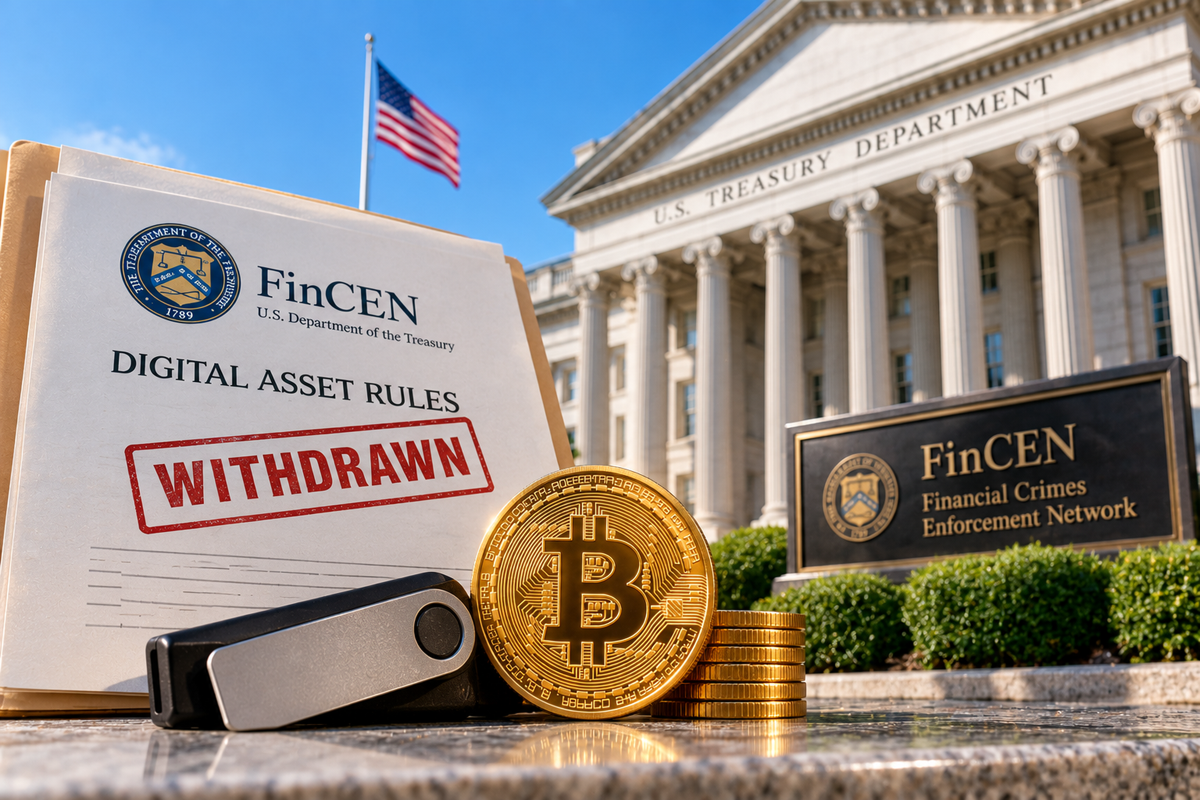
- FinCEN withdrew a 2020 proposal that would have required banks and crypto businesses to report certain crypto transactions above $10,000 involving self-hosted wallets.
- The proposal also included a $3,000 recordkeeping threshold for certain transactions involving unhosted wallets, while more than 7,500 public comments were submitted during the original rulemaking process.
- FinCEN also withdrew a separate 2023 crypto-mixing proposal, marking a significant change in the regulatory treatment of self-custody and mixing activity in the United States.
The U.S. Financial Crimes Enforcement Network has withdrawn two long-standing proposals that had shaped the regulatory debate around crypto self-custody and mixers without ever becoming effective rules. The decision removes a potential reporting requirement for transactions involving private wallets and signals a shift toward a different regulatory approach as digital assets become increasingly integrated into the U.S. financial system.
The $10,000 Wallet Reporting Rule Is Gone
The withdrawn proposal, first introduced in December 2020, would have required banks and money-service businesses, including crypto exchanges, to collect and report information when customers transferred more than $10,000 in convertible virtual currency to or from unhosted wallets within a 24-hour period. Firms would also have been required to verify customer identities and collect information about the counterparty wallet.
The proposal also included a $3,000 threshold for recordkeeping and customer verification requirements in certain transactions involving unhosted or otherwise covered wallets. FinCEN received more than 7,500 comments during the original rulemaking process, underscoring the intensity of the debate surrounding government oversight of self-custodied digital assets.
Self-Custody Gets Regulatory Breathing Room
An unhosted wallet is one in which the user controls the private keys rather than relying on an exchange, bank or other financial intermediary. The withdrawal therefore removes a proposed layer of reporting that could have required regulated intermediaries to gather additional information when customers moved crypto into wallets they controlled themselves.
For crypto investors and institutions, the significance is primarily operational and regulatory. The proposal had remained unresolved for almost six years, creating uncertainty around how exchanges and other regulated businesses might eventually handle transfers between custodial platforms and privately controlled wallets. FinCEN’s withdrawal means those specific requirements will not take effect under that proposal.
Crypto Mixers Also Escape the 2023 Proposal
FinCEN simultaneously withdrew a separate proposal issued in 2023 that would have treated international convertible virtual currency mixing as a class of transactions of primary money-laundering concern. The proposed measure would have introduced enhanced recordkeeping and reporting requirements for financial institutions handling transactions associated with crypto mixers.
The two withdrawals are separate from any broader enforcement powers or existing anti-money-laundering obligations. FinCEN said it had considered public comments and was withdrawing both measures as part of the administration’s effort to establish “fit-for-purpose” digital-asset regulations.
What the Change Means for Crypto Market Structure
For sophisticated crypto participants, the immediate impact is less about transaction volumes than about regulatory clarity. Exchanges and financial institutions no longer need to prepare for the specific reporting architecture contemplated by the withdrawn proposals, while users retain greater flexibility around self-custody under the status quo.
However, the withdrawals do not eliminate broader compliance requirements or future rulemaking. FinCEN continues to oversee anti-money-laundering and financial-intelligence obligations, and the agency has already demonstrated that it remains willing to pursue other targeted measures involving digital assets.
The next question for the crypto industry is whether Washington replaces the withdrawn proposals with narrower rules that distinguish legitimate self-custody from illicit financial activity more precisely. For institutional investors, how that balance develops will remain important as banks, exchanges and asset managers build infrastructure around increasingly mainstream digital-asset markets.
Comparison, examination, and analysis between investment houses
Leave your details, and an expert from our team will get back to you as soon as possible