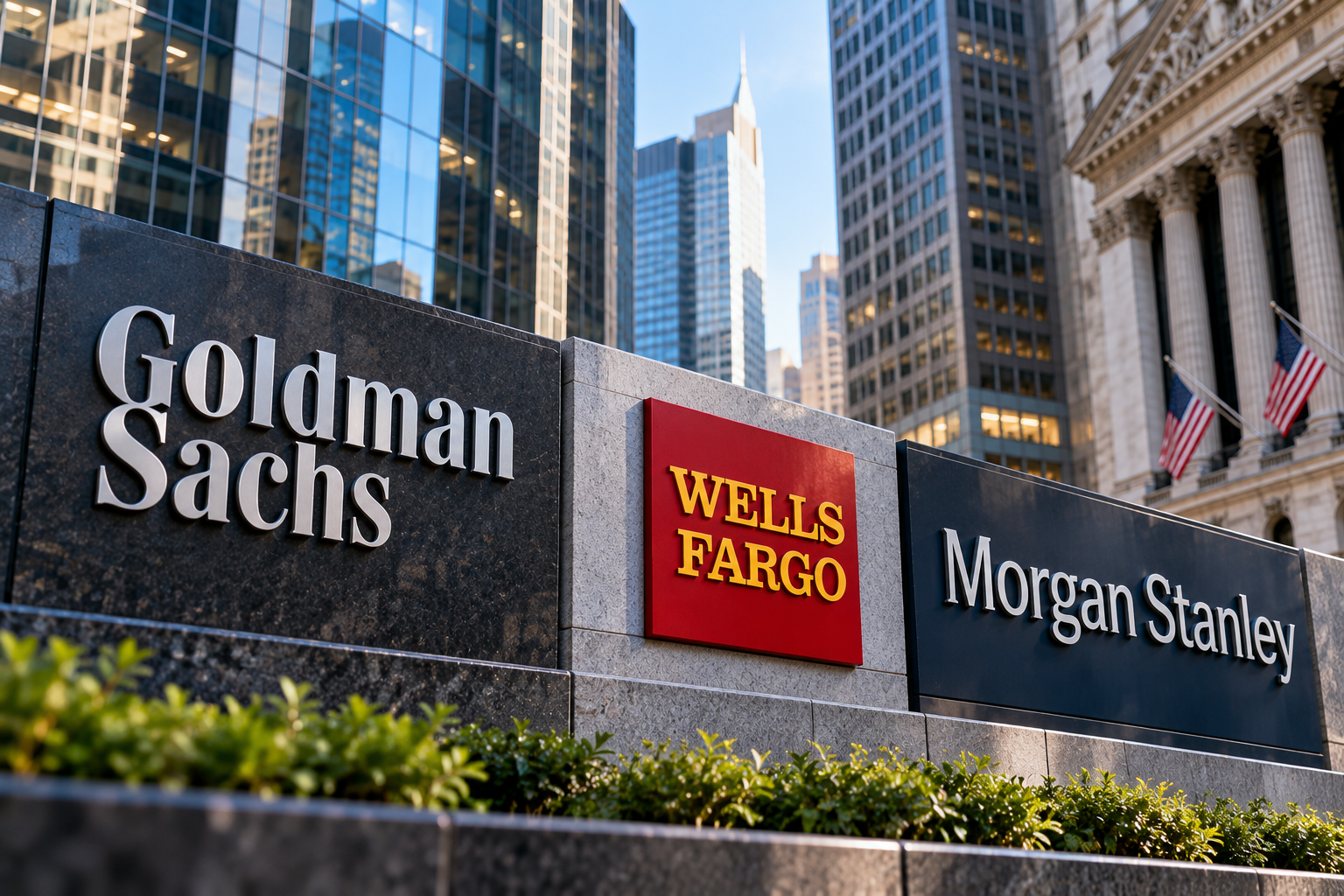
Key Points:
- Goldman Sachs, Wells Fargo and Morgan Stanley are positioning tokenization as an extension of their existing financial services, with opportunities in trading, cross-border payments and wealth management.
- Wells Fargo says its tokenized deposit payments are already in production, with cross-border transfers reaching beneficiary accounts in two minutes or less, although transaction volumes remain small.
- None of the three banks quantified potential tokenization revenue, underscoring that commercial adoption remains at an early stage despite growing institutional interest.
Major Wall Street banks are increasingly treating blockchain-based tokenization as a potential source of business growth rather than an immediate threat to traditional financial services. During their third-quarter earnings discussions, Goldman Sachs, Wells Fargo and Morgan Stanley outlined different opportunities, ranging from securities trading and faster payments to investment advice. Their comments reflect a broader institutional shift toward integrating digital-asset infrastructure into established financial markets while retaining existing client relationships and regulatory frameworks.
Goldman Sachs Sees New Trading and Distribution Opportunities
Goldman Sachs CEO David Solomon argued that tokenization, decentralized finance and prediction markets could expand rather than diminish the firm’s trading business. He pointed to the historical transition toward electronic stock trading as an example of how technological change can create new products and activity for established financial institutions.
Solomon identified potential benefits including more products, greater client activity, new customers and broader distribution channels. Goldman has been developing its digital-asset capabilities for several years, including its GS DAP tokenization platform, introduced in 2022, and projects involving bonds, money market funds and real estate.
The bank also participated in a tokenization service operated by the Depository Trust & Clearing Corporation (DTCC). The initiative could support more efficient securities processing and settlement, potentially reducing operational friction and making certain assets easier to transfer. However, Solomon emphasized that current activity remains small and marginal to the firm’s overall business. Tokenization’s long-term revenue contribution has not yet been established.
Wells Fargo Uses Tokenized Deposits for Faster Payments
Wells Fargo is already processing cross-border payments using tokenized deposits, according to CFO Michael Santomassimo. The bank reported that payments can reach beneficiary accounts in two minutes or less, although the current transaction volume remains limited.
Tokenized deposits represent bank deposits in digital token form, allowing financial institutions to use blockchain-based infrastructure while maintaining a connection to conventional banking relationships. Faster settlement could improve the movement of money across borders and reduce delays associated with traditional payment processes.
The technology may be particularly relevant to Wells Fargo because the bank has a smaller international branch network than some global competitors. Tokenized payment infrastructure could help it expand its cross-border services without requiring the same physical presence in every market. Potential additional applications include tokenized securities, real-world assets and cryptocurrency services for wealth-management clients, although the bank has not announced a timetable for those offerings.
Morgan Stanley Emphasizes the Continuing Role of Financial Advice
Morgan Stanley is approaching tokenization from a wealth-management and investment-services perspective. CFO Sharon Yeshaya said that making assets faster and easier to move would not eliminate the need for professional advice. Instead, more efficient asset transfers could increase the importance of helping clients navigate their financial choices.
This perspective highlights a distinction between automating transactions and replacing the broader services financial institutions provide. Tokenization may reduce certain administrative barriers, but investors can still require guidance on portfolio structure, risk exposure, tax considerations and long-term financial objectives.
Morgan Stanley has been investing in digital capabilities across wealth management and institutional securities. However, Yeshaya did not announce a new tokenization product or quantify the expected revenue opportunity. The firm’s comments therefore indicate strategic interest rather than a fully defined commercial rollout.
Commercial Adoption Remains the Main Test
For institutional investors, the three banks illustrate how tokenization could support existing business models through different channels: trading innovation at Goldman Sachs, payment efficiency at Wells Fargo and advisory services at Morgan Stanley. The technology could eventually improve asset mobility, settlement processes and access to financial products, but these benefits depend on interoperability, regulatory clarity, security and sufficient client demand.
Looking ahead, investors will be watching for measurable transaction growth, wider product availability and evidence that tokenization can generate recurring revenue. The banks’ current positions suggest that Wall Street is preparing to participate in the development of blockchain-based markets rather than simply compete against them. The decisive question will be whether early operational improvements translate into scalable, commercially meaningful businesses.
Comparison, examination, and analysis between investment houses
Leave your details, and an expert from our team will get back to you as soon as possible