Key Points:
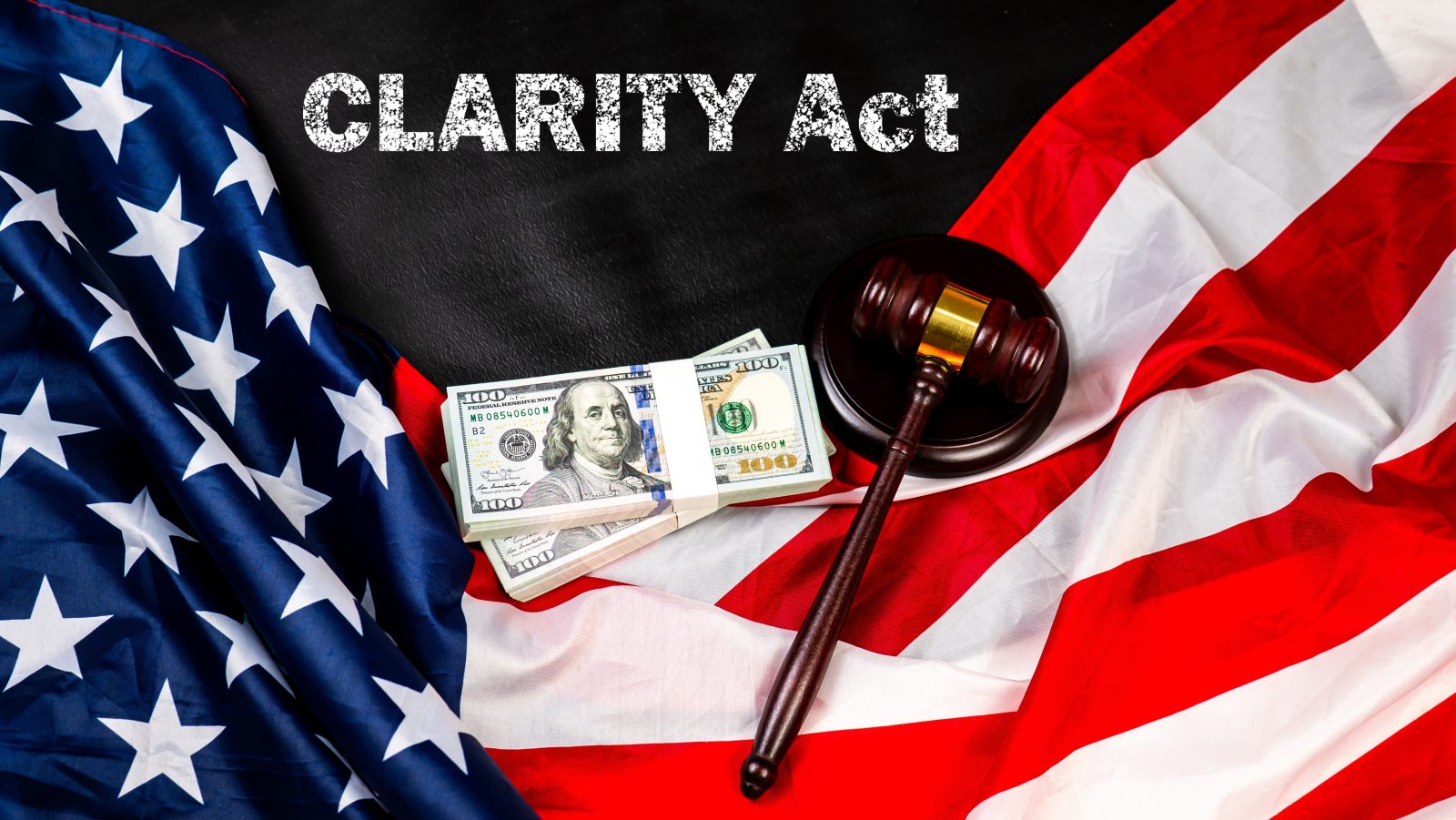
- The Senate’s failure to advance the CLARITY Act leaves the U.S. without a comprehensive federal crypto market-structure framework and keeps the roles of the SEC and CFTC unresolved.
- U.S.-focused crypto companies suffered an immediate market reaction, with Coinbase and Circle falling about 10% after the vote, while Bitcoin declined roughly 4% toward $76,000.
- SEC and CFTC rulemaking can provide near-term guidance, but industry participants say legislation remains important for long-term certainty around investment, product launches and compliance costs.
U.S. Crypto Faces a Regulatory Competitiveness Test
The failure of the CLARITY Act to advance through the U.S. Senate has left the country’s crypto industry without the comprehensive federal framework it had spent years seeking. The setback could encourage some capital, talent and blockchain development to move toward jurisdictions with clearer rules, although regulatory action from the SEC and CFTC may provide a partial bridge while Congress remains divided.
The market reaction underscored the stakes. Coinbase and Circle fell about 10% following the vote, while Bitcoin declined roughly 4% toward $76,000 and Ethereum fell nearly 5% to around $2,410. XRP dropped almost 10% to approximately $1.30, demonstrating that the legislative setback affected both crypto-linked equities and digital assets.
Legal Uncertainty Could Influence Where Capital Flows
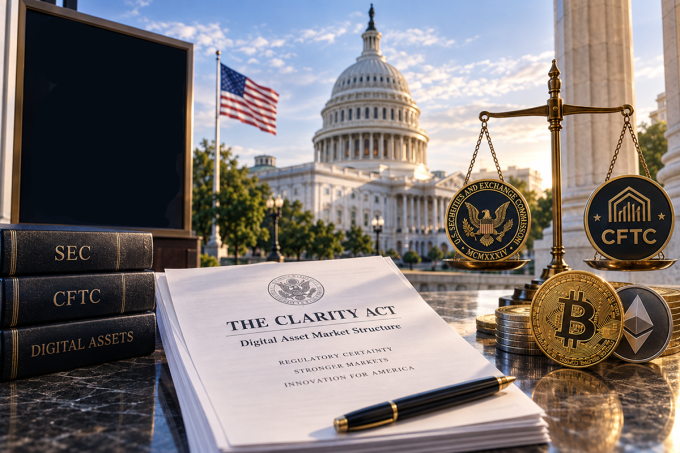
The CLARITY Act was intended to establish clearer boundaries between the SEC and Commodity Futures Trading Commission while defining how different digital assets and market participants would be regulated. Without congressional action, companies must continue navigating a framework that can change through agency rules, interpretations and enforcement priorities rather than through a single statutory regime.
Some industry executives argue that this creates a competitive disadvantage. Gate CEO Lin Han said capital and talent tend to move toward jurisdictions where rules are clearer, while CertiK’s Stefan Muehlbauer described overseas markets in Asia and Europe as potential beneficiaries. The European Union’s MiCA framework became fully effective in July, while the U.K. is still developing its broader regime, highlighting differences in regulatory timing across major financial centers.
Foreign Markets Could Gain From the U.S. Delay
The potential shift should not be interpreted as an immediate migration of global crypto activity. Bitget CEO Gracy Chen argued that crypto is inherently global and that traders will continue to prioritize liquidity, products and market access. She also said Bitget’s plans to enter the U.S. with appropriate licenses do not depend entirely on the legislation.
Bitwise Chief Investment Officer Matt Hougan similarly characterized the outcome as a setback rather than an end to the industry’s U.S. expansion. His view reflects an important distinction for institutional investors: the failed vote increases uncertainty, but it does not eliminate existing demand for digital assets, tokenization or blockchain infrastructure.
SEC and CFTC Rules Become More Important
The immediate regulatory response is increasingly shifting toward the agencies. SEC Chairman Paul Atkins and CFTC Chairman Michael Selig have both pledged to use their existing authorities to advance crypto rules. The SEC’s newly issued five-year Innovation Exemption for qualifying tokenized securities venues demonstrates how agency action can create specific pathways even without comprehensive legislation.
Industry leaders nevertheless distinguish agency rules from congressional legislation. Rules can be implemented more quickly, but legislation generally provides a more durable framework for firms making multiyear decisions about investment, product development and compliance infrastructure. That distinction could become increasingly important as banks, exchanges and asset managers expand their digital-asset operations.
What Crypto Investors Are Watching Next
The next phase will center on SEC and CFTC rulemaking, renewed congressional negotiations and international adoption. Stablecoins, tokenization and cross-border payments are continuing to develop regardless of the Senate vote, but the location of future investment and infrastructure could be influenced by regulatory certainty. Whether Washington can eventually produce durable legislation will therefore remain an important competitive question for the U.S. digital-asset industry.
Comparison, examination, and analysis between investment houses
Leave your details, and an expert from our team will get back to you as soon as possible