Key Points:
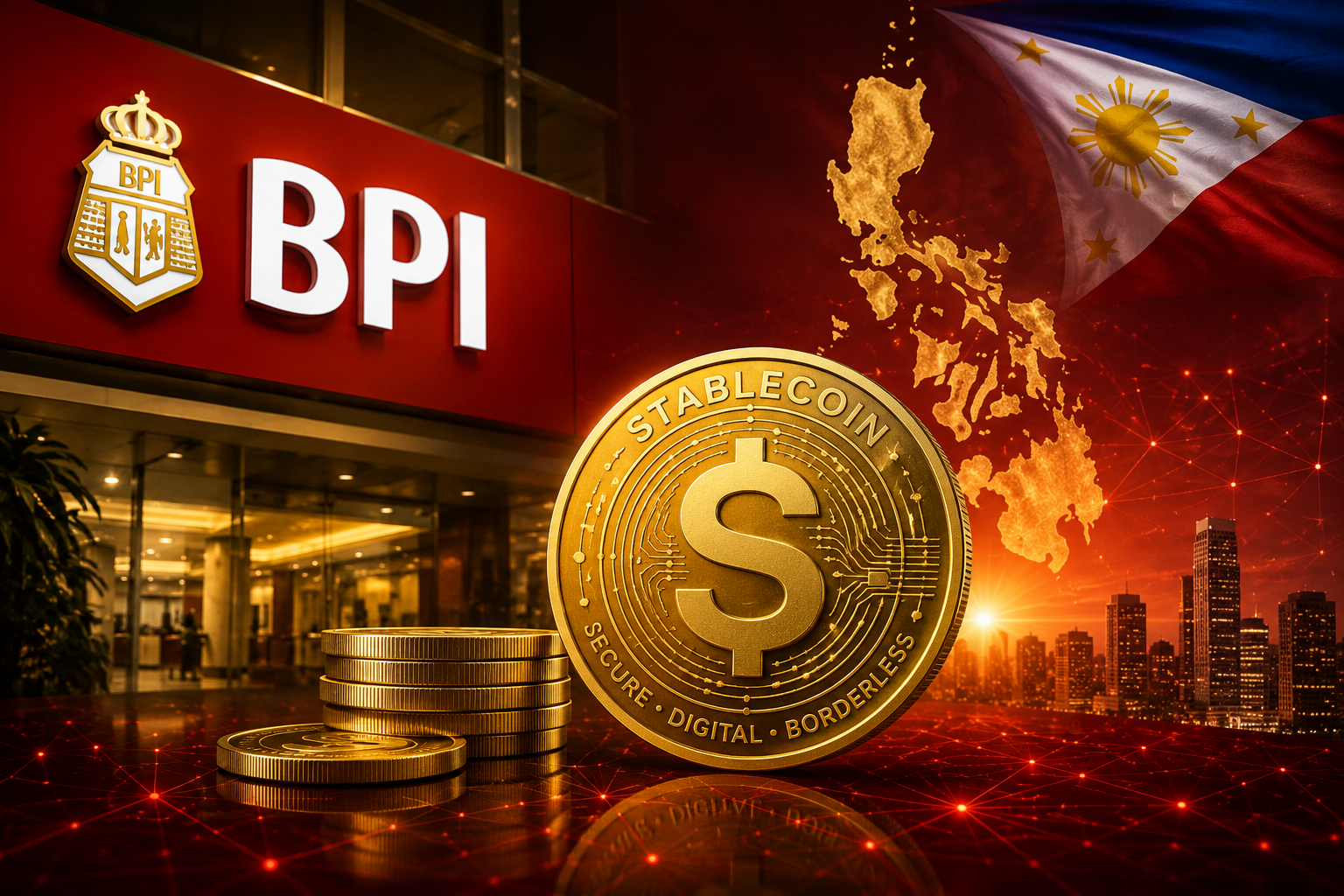
- Bank of the Philippine Islands (BPI) plans to launch a pilot program using stablecoins to facilitate cross-border payments.
- The initiative aims to reduce the cost and settlement time for overseas income sent to Filipino freelancers, virtual assistants and remote workers.
- Stablecoins will serve as the settlement layer before funds are converted into Philippine pesos and deposited into customers’ BPI accounts.
- The bank will work with the Bangko Sentral ng Pilipinas (BSP) to ensure regulatory compliance and consumer protection before a wider rollout.
BPI Explores Stablecoins for Cross-Border Payments
The Bank of the Philippine Islands (BPI) is preparing to test a stablecoin-powered payment system designed to improve the speed and affordability of international money transfers for Filipinos earning income from overseas.
The pilot program, developed in partnership with global digital clearinghouse Meridian, will focus on workers such as freelancers, virtual assistants and other professionals who receive payments from international clients.
By integrating stablecoins into the settlement process, BPI aims to modernize cross-border payments while maintaining the security and compliance standards associated with traditional banking services.
Stablecoins to Power Faster Settlement
Under the proposed system, stablecoins will function as an intermediary settlement asset rather than as a currency held by customers.
Payments sent from abroad will first be settled using stablecoins before being automatically converted into Philippine pesos and deposited directly into recipients’ BPI bank accounts.
This approach is expected to shorten settlement times while lowering transaction costs compared with conventional international payment networks.
Customers will continue to receive their funds in local currency, allowing them to benefit from blockchain-based settlement without needing to manage digital assets themselves.
Supporting the Growing Digital Workforce
The pilot will initially target payroll payments and overseas earnings received by the country’s rapidly expanding digital workforce.
Millions of Filipinos earn income through remote employment, freelance work and online services, making efficient cross-border payments increasingly important for the country’s digital economy.
By reducing delays and transfer costs, BPI hopes to improve the payment experience for workers who depend on timely international income.
The initiative aligns with broader efforts to strengthen financial inclusion and modernize payment infrastructure in the Philippines.
Part of BPI’s Digital Transformation Strategy
BPI President and Chief Executive Officer Jose Teodoro Limcaoco said the exploration of stablecoin-based payment rails is a natural extension of the bank’s ongoing digital transformation initiatives.
The objective is to deliver faster and more cost-effective payment services while preserving the reliability, security and regulatory safeguards expected from a leading financial institution.
The bank plans to expand the program ahead of the 49th ASEAN Summit in November, subject to regulatory approval and successful pilot results.
Regulatory Oversight Remains a Priority
BPI emphasized that it will coordinate closely with the Bangko Sentral ng Pilipinas (BSP) throughout the pilot.
Any broader deployment will depend on meeting regulatory requirements related to consumer protection, stablecoin reserve transparency, risk management and compliance standards.
The cautious approach reflects the growing interest among financial institutions in adopting blockchain technology while ensuring digital asset innovations operate within established financial regulations.
Outlook
BPI’s planned stablecoin payment pilot highlights the increasing adoption of blockchain technology by traditional banks seeking to improve cross-border payments. By using stablecoins as a settlement mechanism while continuing to deliver funds in Philippine pesos, the bank aims to combine the efficiency of blockchain with the trust and regulatory oversight of the banking system. If successful, the initiative could serve as a model for future stablecoin-powered payment services across Southeast Asia.
Comparison, examination, and analysis between investment houses
Leave your details, and an expert from our team will get back to you as soon as possible