Key Points:
- House Financial Services Committee Chair French Hill said recent SEC and CFTC actions on cryptocurrency regulation do not provide the long-term certainty that congressional legislation could deliver.
- Hill said he remains hopeful that lawmakers can advance the CLARITY Act during the post-election lame-duck session before the next Congress begins in 2027.
- The SEC is currently operating with Chair Paul Atkins and Commissioner Mark Uyeda following Hester Peirce’s Oct. 2 departure, while CFTC Chair Michael Selig remains the agency’s sole commissioner.
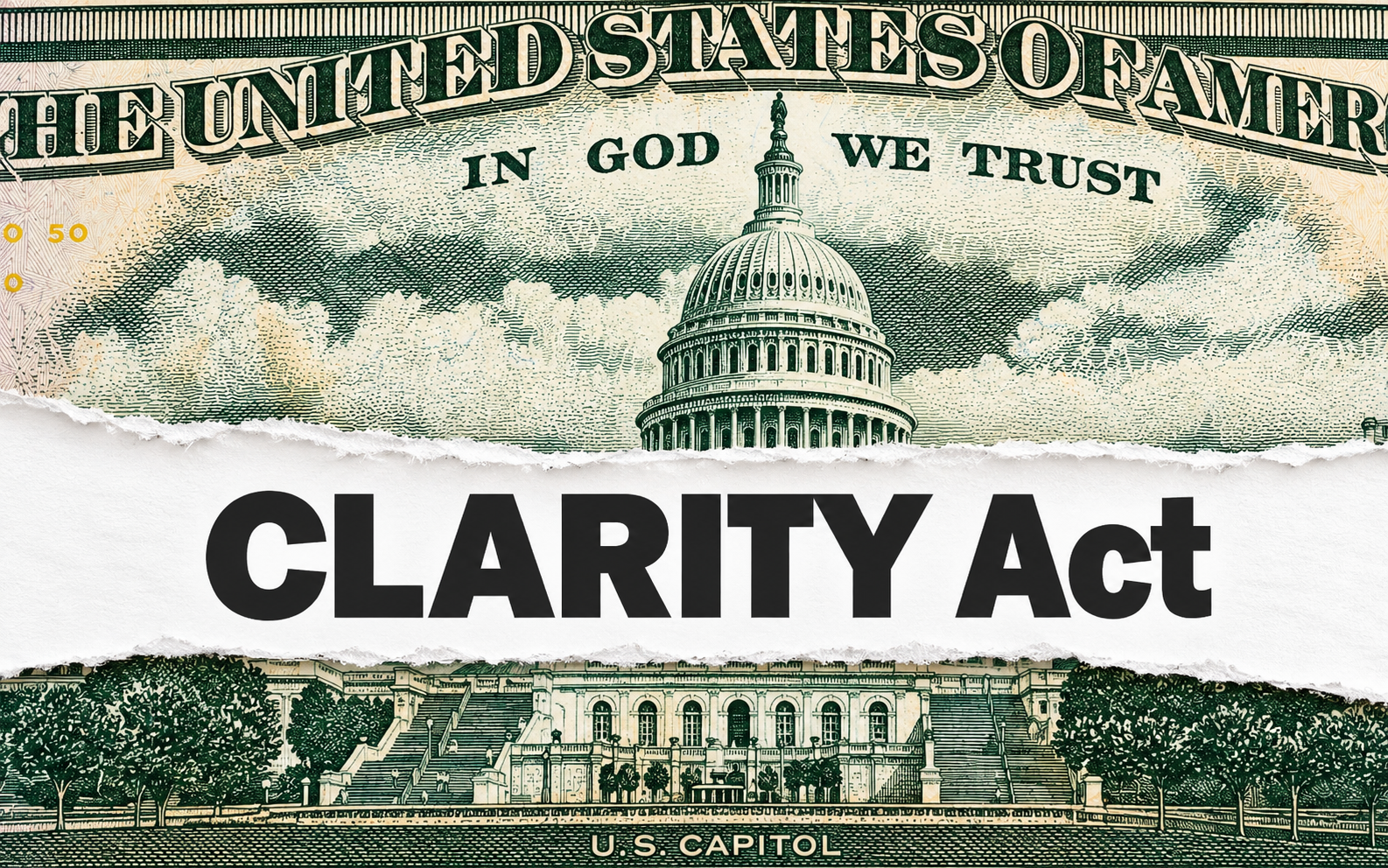
US lawmakers and financial regulators are taking different approaches to cryptocurrency oversight following the Senate’s failure to advance the Digital Asset Market Clarity Act, with House Financial Services Committee Chair French Hill arguing that agency action cannot provide the same permanence as legislation.
In a Fox Business interview on Wednesday, the Arkansas Republican said the Securities and Exchange Commission and Commodity Futures Trading Commission had moved to address parts of the regulatory gap left by the failed CLARITY vote. However, Hill said those measures fell short of the broader and more durable framework he believes Congress needs to establish.
Hill Pushes for Legislative Framework
Hill said he still hopes lawmakers can pass the CLARITY Act during the lame-duck period after the November midterm elections. He argued that permanent changes to federal law would provide greater certainty for the digital-asset industry than regulatory measures adopted by agencies.
The comments came as the CFTC advances a proposed framework for federal oversight of certain cryptocurrency markets. The agency’s proposal would establish a new regulatory category for crypto-asset markets and impose requirements including registration, anti-manipulation controls and proof-of-reserves obligations for qualifying platforms.
The SEC has also been pursuing its own regulatory initiatives covering areas of the digital-asset market, including proposals intended to provide a clearer path for crypto innovation and tokenized securities.
Hill’s position is that these actions can address parts of the regulatory landscape but do not replace legislation defining the respective roles and authorities of the SEC and CFTC.
Lame-Duck Session Becomes Key Window
The timing of any legislative effort will depend heavily on the post-election congressional calendar. With the midterm elections approaching, the current Congress has a limited period in which lawmakers could attempt to advance the market-structure legislation before the next Congress takes office in January 2027.
The election results could also affect the political environment surrounding the bill, as lawmakers would know whether they are returning for another term or leaving Congress.
The CLARITY Act previously advanced through the House with bipartisan support but failed to clear a Senate procedural hurdle in September. Its future therefore remains dependent on whether lawmakers can find a path forward during the limited legislative window following the elections.
Regulatory Leadership Faces Vacancies
The push for legislation comes as both agencies responsible for major portions of US financial-market oversight face unusually small leadership teams.
At the SEC, Hester Peirce resigned effective Oct. 2, leaving Chair Paul Atkins and Commissioner Mark Uyeda as the two remaining commissioners. The SEC officially confirmed her departure and thanked her for her service.
At the CFTC, Michael Selig is serving as chair and sole commissioner. The reduced leadership at both agencies adds another layer of uncertainty to the development and implementation of the US digital-asset regulatory framework.
Outlook
The debate over the CLARITY Act now centers on whether Congress can establish a permanent market-structure framework before the current legislative session ends. Regulatory agencies can continue using their existing authority to address parts of the market, but Hill’s comments underscore the continuing divide between agency-led rulemaking and congressional legislation. The post-election lame-duck session could therefore become an important test of whether the United States can move from temporary regulatory measures toward a statutory framework for digital assets.
Comparison, examination, and analysis between investment houses
Leave your details, and an expert from our team will get back to you as soon as possible